Creating a beautiful patio isn’t about buying the most expensive outdoor furniture or copying a perfectly styled magazine photo. The spaces that feel truly inviting usually have something else in common: they look intentional.
Professional designers rarely rely on dozens of decorative accessories. Instead, they focus on a few carefully chosen elements that work together to create balance, warmth, and comfort.
The good news? You don’t need a large budget or a complete makeover to achieve that feeling. By paying attention to a handful of timeless details, almost any outdoor space can feel more refined, welcoming, and effortlessly elevated.
Here are five principles that designers return to again and again.
1. Bring Nature Closer
The easiest way to make a patio feel beautiful is to let nature become part of the design.
Plants soften hard architectural lines, introduce movement, and make even newly built outdoor spaces feel established. They also create a subtle sense of privacy and make a patio feel more connected to its surroundings.
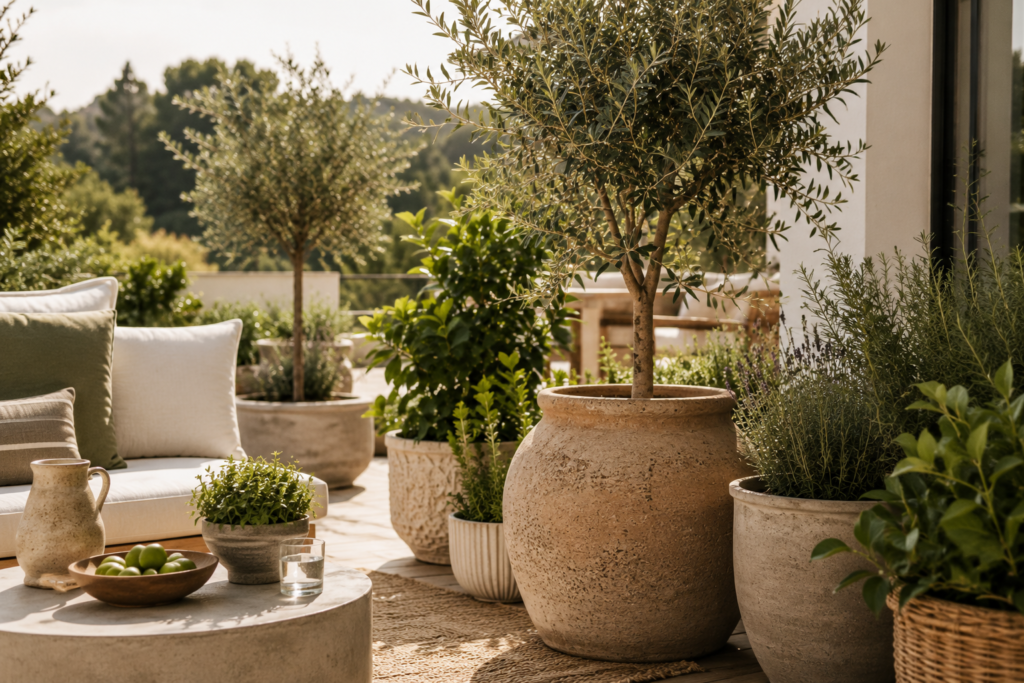
Instead of scattering many small pots around your seating area, choose two or three larger planters with plants that have different shapes and heights. This creates a stronger visual impact while keeping the space uncluttered.
Olive trees, citrus trees, ornamental grasses, lavender, rosemary, hydrangeas, or even a simple arrangement of herbs can all become beautiful focal points.
If your patio is very small, don’t think in terms of quantity. One substantial planter beside a sofa often creates more presence than ten tiny flower pots.
Curated tip
Think vertically as well as horizontally. Tall plants naturally frame a seating area and make it feel more intimate without blocking light.
2. Layer Natural Textures
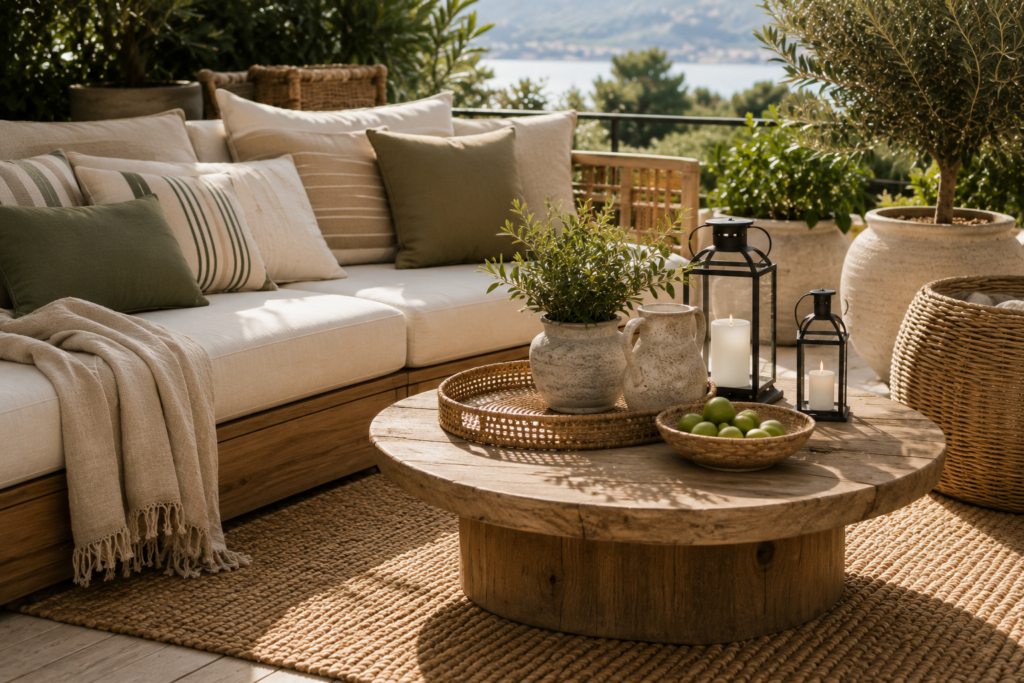
One reason luxury outdoor spaces feel so inviting is that they rarely rely on color alone. Instead, they combine different textures that catch light in different ways.
Natural materials immediately add warmth and character:
- linen cushions
- woven baskets
- teak furniture
- rattan accents
- ceramic planters
- stone accessories
- jute or outdoor rugs
Even if everything is neutral, these contrasting surfaces prevent the space from feeling flat.
A helpful rule is to mix at least three different materials. For example:
- smooth ceramics
- woven rattan
- natural wood
Together they create depth while maintaining a calm, cohesive look.
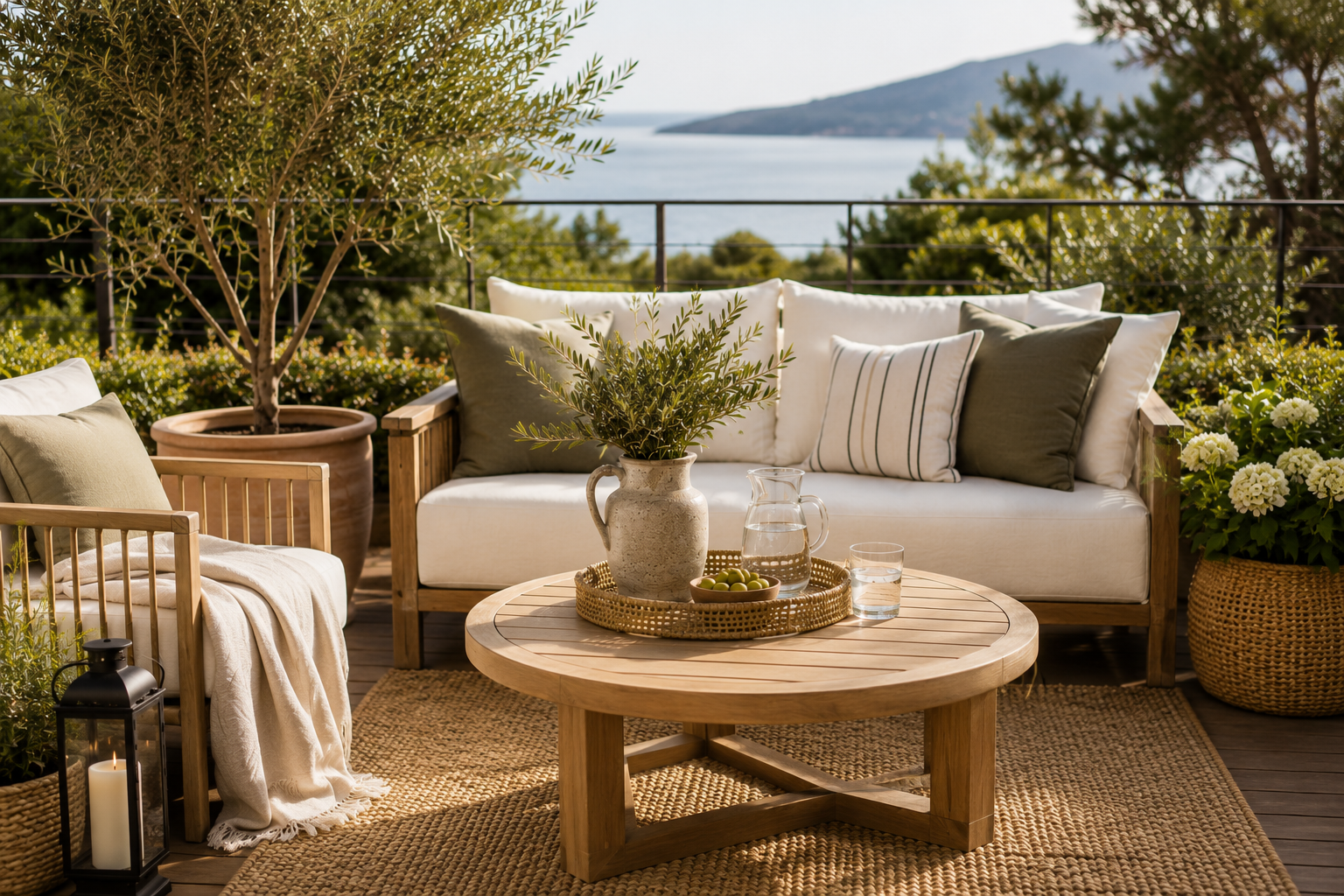
Rather than buying matching furniture sets, introduce variety gradually. A single woven tray, textured planter, or linen throw can make an existing patio feel far more collected.
3. Create Layers of Light
Beautiful patios don’t stop looking beautiful when the sun goes down.
Lighting is often the detail that separates a functional outdoor space from one that feels memorable.
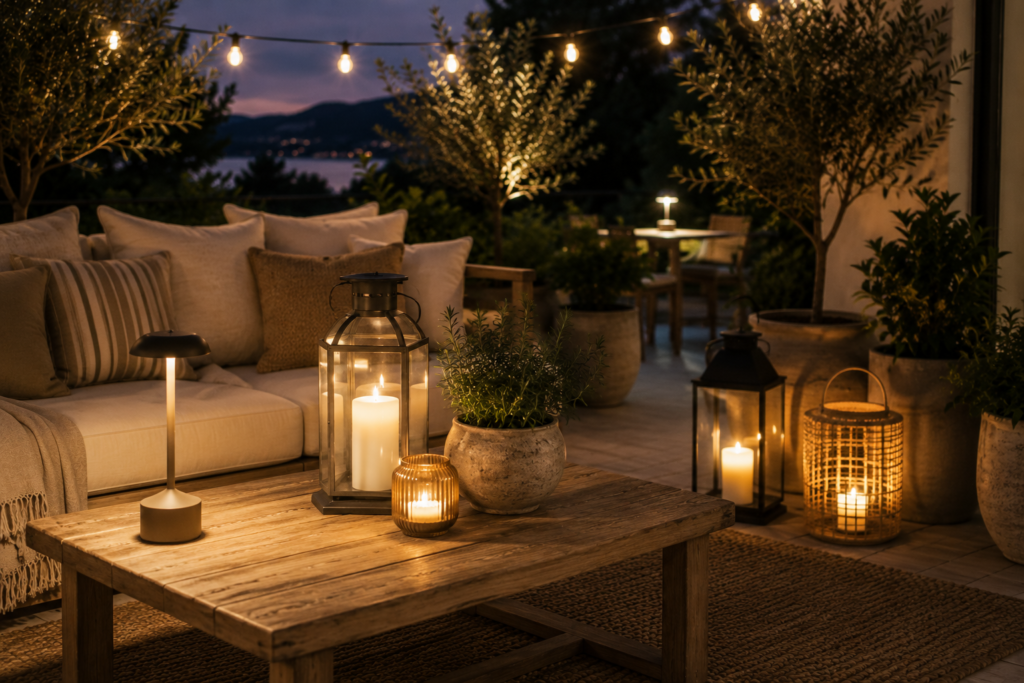
Instead of relying on one bright light source, layer several softer ones.
Consider combining:
- lanterns placed on the floor
- rechargeable table lamps
- candles
- string lights
- subtle wall lighting
This combination creates gentle pools of light that make an outdoor space feel relaxed and welcoming.
Warm lighting also changes the way natural materials appear. Wood becomes richer, linen looks softer, and greenery gains depth, creating an atmosphere that’s difficult to achieve during the day.
Designer mindset
Good lighting shouldn’t dominate the space. It should simply make people want to stay outside a little longer.
4. Style for Real Life
The most beautiful patios never feel like showroom displays.
They suggest that someone actually enjoys spending time there.
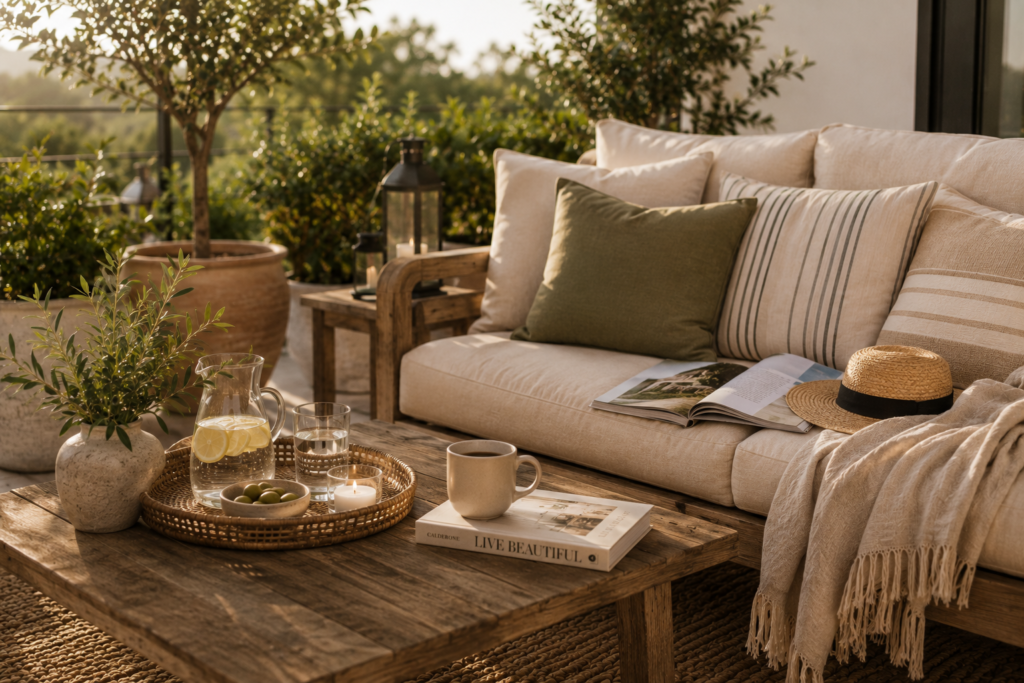
Instead of decorating for photographs, style your patio around the moments you want to experience.
Maybe that’s:
- morning coffee in the sunshine
- reading after work
- dinner with friends
- quiet evenings with candles
- weekend breakfasts outdoors
Once you know how you want to use the space, decorating becomes much easier.
A tray with glasses, a linen napkin, a ceramic pitcher filled with water, a favorite book, or a folded throw instantly makes a patio feel lived in rather than staged.
This approach also helps avoid buying unnecessary decorations. Every object has a purpose while still contributing to the overall aesthetic.
5. Keep the Palette Timeless
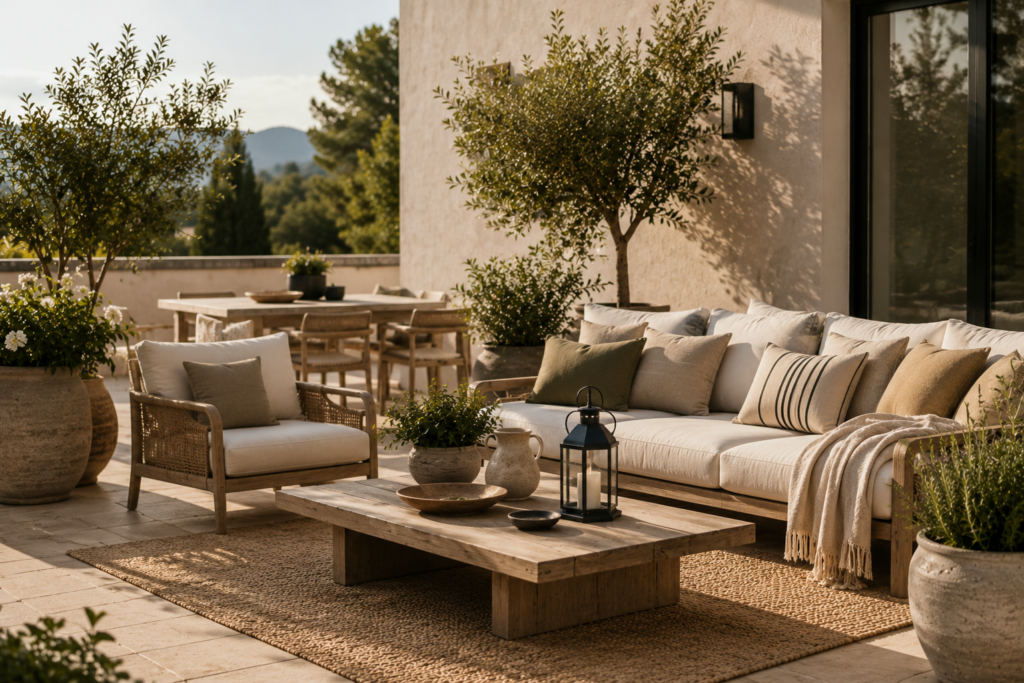
Outdoor spaces naturally contain many colors—greenery, flowers, blue skies, changing seasons. Because of that, the furniture and accessories don’t need to compete for attention.
A restrained palette creates a calmer and more sophisticated atmosphere.
Some of the most timeless combinations include:
- warm white
- soft sand
- natural wood
- olive green
- terracotta
- charcoal accents
These colors work beautifully throughout the year and can easily be refreshed with seasonal details like cushions, flowers, or table settings.
Instead of replacing furniture every few years, invest in pieces with simple silhouettes and classic finishes. They provide a foundation that evolves effortlessly over time.
A Simple Styling Formula
Whenever you feel your patio is missing something, don’t rush to buy more accessories.
Instead, check whether you’ve included these five elements:
✓ Greenery for life and softness
✓ Natural textures for warmth
✓ Layered lighting for atmosphere
✓ Functional styling for everyday living
✓ A timeless color palette for cohesion
If one of these is missing, adding it will usually have a greater impact than buying another decorative object.
The Beauty Is in the Details
An elevated patio isn’t defined by its size or its price tag.
It’s created through thoughtful choices that make the space feel balanced, comfortable, and welcoming. A few carefully selected plants, layered textures, warm lighting, and timeless colors can completely change how an outdoor area feels.
The goal isn’t perfection. It’s creating a place where you naturally want to slow down, enjoy your morning coffee, linger over dinner, or simply watch the evening light fade.
Beautiful outdoor living is rarely about having more.
It’s about choosing with intention.
Curated Take
The next time you look at your patio, ask yourself one simple question:
“Does every piece add beauty, comfort, or purpose?”
If the answer is yes, you’re already much closer to a patio that feels effortlessly elevated—one that’s designed not just to be admired, but to be enjoyed every day.