Have you ever wondered why professionally designed homes effortlessly combine oak floors, walnut coffee tables, and maple shelving—while attempting the same in your own home can feel risky?
The truth is that interior designers rarely match every wood finish. Instead, they create balance through repetition, contrast, and thoughtful layering. Mixing wood tones is one of the easiest ways to make a home feel collected, sophisticated, and full of character.
Whether you’re decorating a single room or furnishing an entire home, these timeless designer rules will help you confidently combine different wood finishes without creating visual chaos.
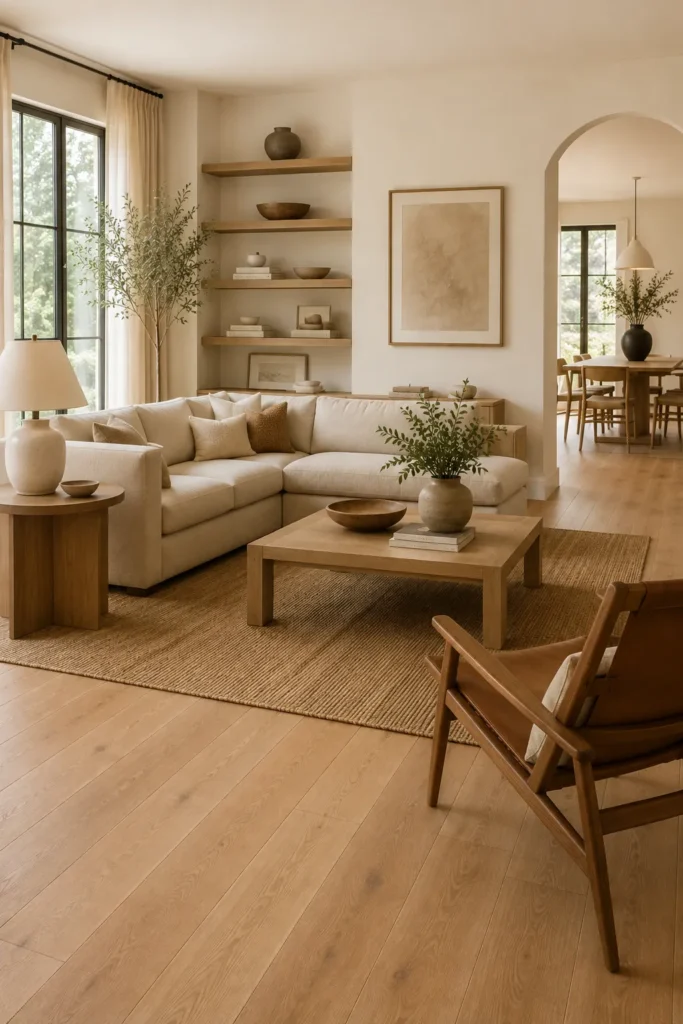
1. Choose One Dominant Wood Tone
Every well-designed room starts with a clear foundation.
Rather than giving every wood finish equal visual weight, designers usually establish one dominant wood tone that occupies roughly 60–70% of the space. This creates consistency and allows additional wood finishes to act as supporting elements rather than competing for attention.
Your dominant wood might be:
- Hardwood flooring
- Kitchen cabinetry
- A large dining table
- Built-in shelving
- Ceiling beams
Once this primary tone is established, introducing secondary woods becomes much easier because the room already feels grounded.
Designer Tip: If your home already has wood flooring, let it become the dominant finish instead of trying to compete with it.
2. Repeat Every Wood Tone at Least Twice
One of the biggest secrets designers use is repetition.
Imagine placing a walnut coffee table in a room filled with light oak furniture. On its own, the table may look out of place. However, once walnut appears again—perhaps in picture frames, a side table, or floating shelves—the combination suddenly feels intentional.
Repeating each wood tone creates visual rhythm throughout the room.
Ways to repeat a wood finish include:
- Picture frames
- Shelving
- Dining chairs
- Console tables
- Decorative bowls
- Wooden trays
- Lamp bases
If a wood tone appears only once, it often looks accidental. If it appears several times, it becomes part of the room’s overall design language.
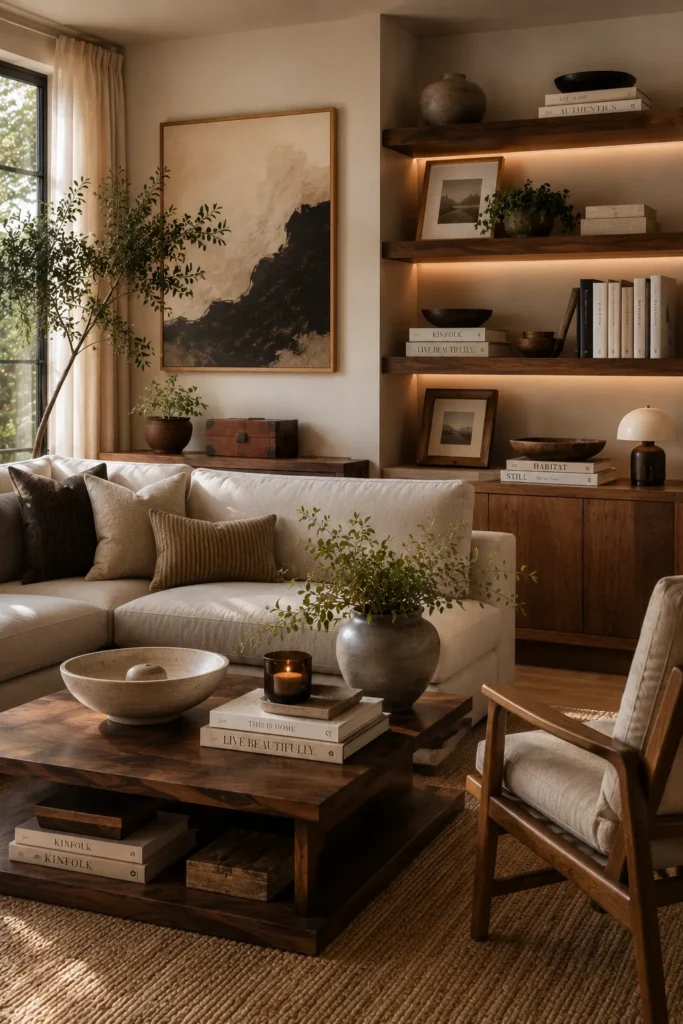
3. Pay Attention to Undertones
This is where many decorating mistakes happen.
Wood isn’t simply “light” or “dark.” Every species has its own undertone, which can dramatically influence how different finishes work together.
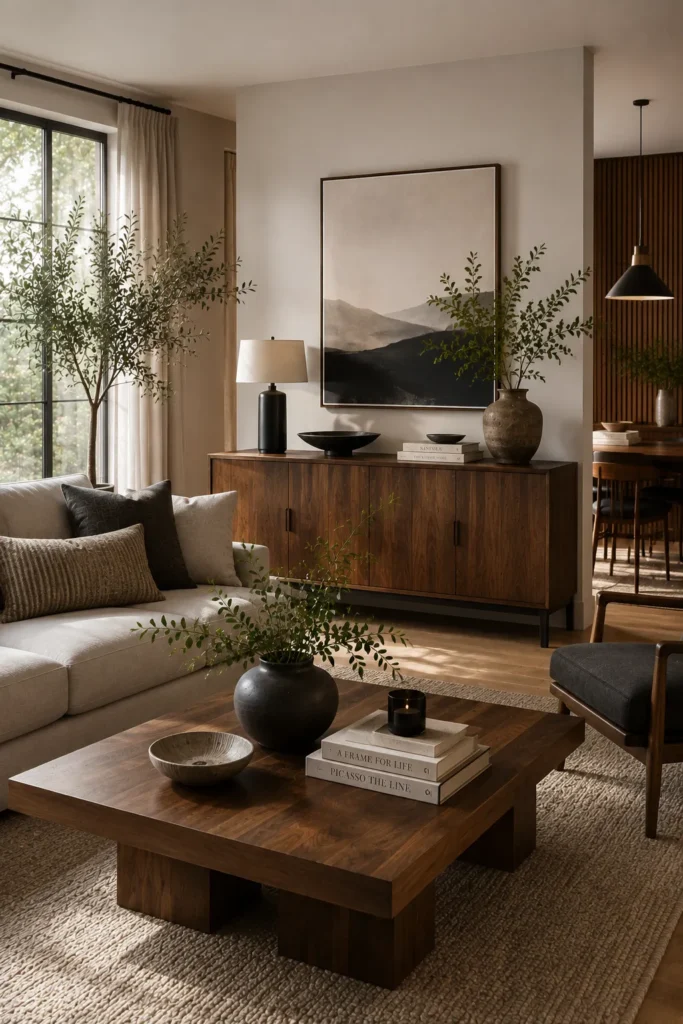
Warm Wood Tones
- Walnut
- Cherry
- Mahogany
- Teak
- Honey Oak
These woods contain golden, orange, or reddish undertones that create warmth and richness.
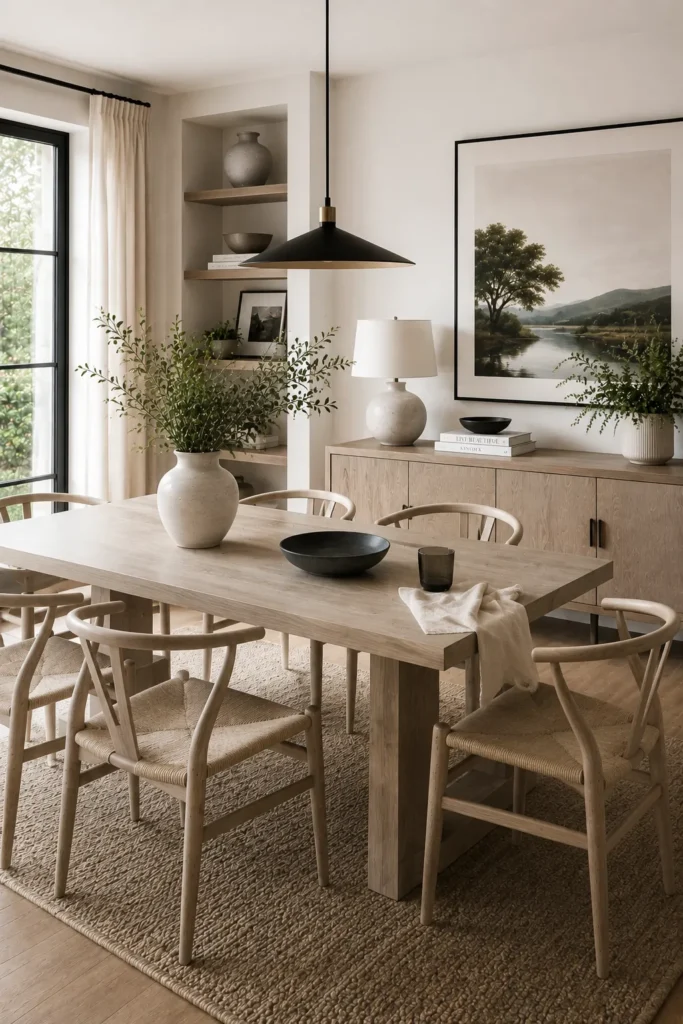
Cool Wood Tones
- Ash
- Gray Oak
- Weathered Oak
- Driftwood Finishes
These woods have gray or taupe undertones, giving interiors a calmer and more contemporary feel.
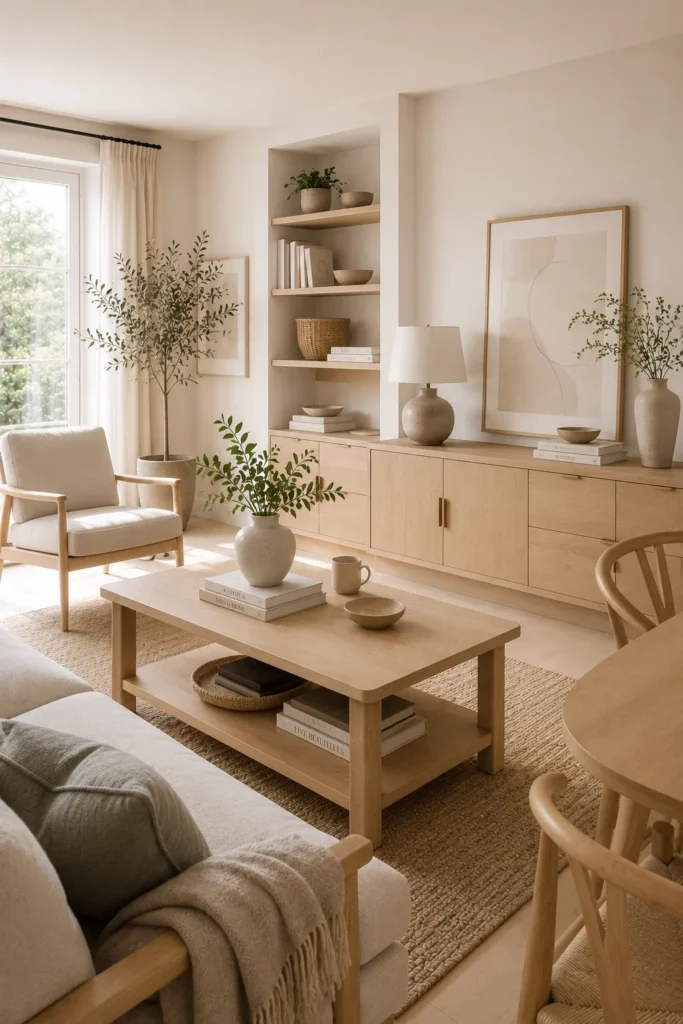
Neutral Wood Tones
- White Oak
- Natural Oak
- Maple
Neutral woods are the easiest to mix because they bridge both warm and cool palettes.
Before introducing a new wood finish, compare its undertones rather than its overall color. Two medium-brown woods can clash if one leans warm and the other cool.
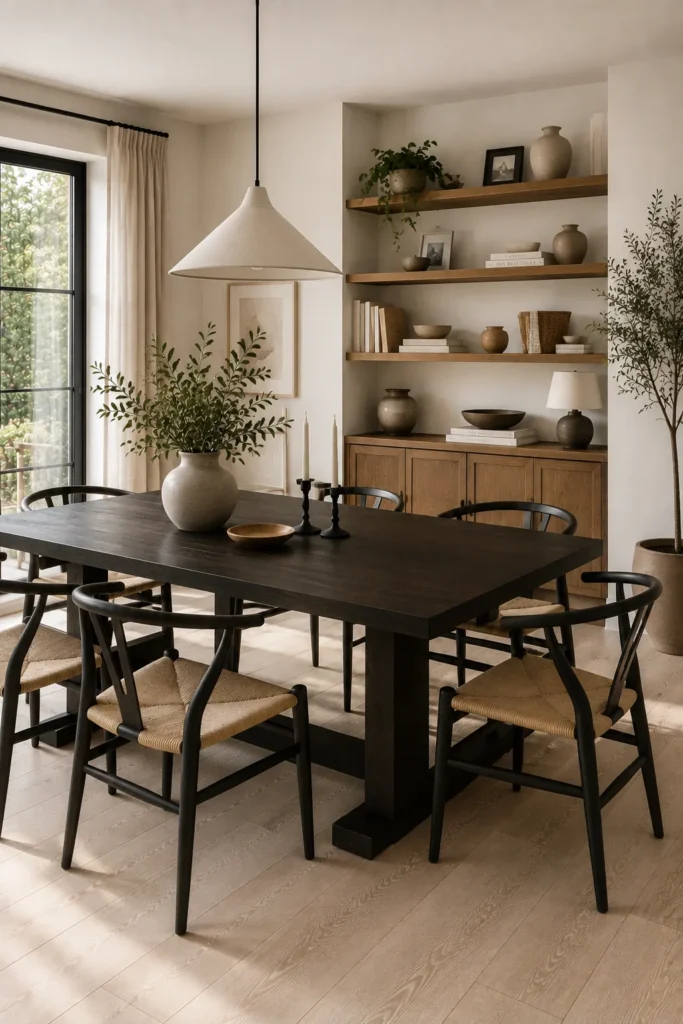
4. Mix Light and Dark Woods for Contrast
Many people believe every wood finish should be nearly identical.
Ironically, this often creates interiors that feel flat and uninspiring.
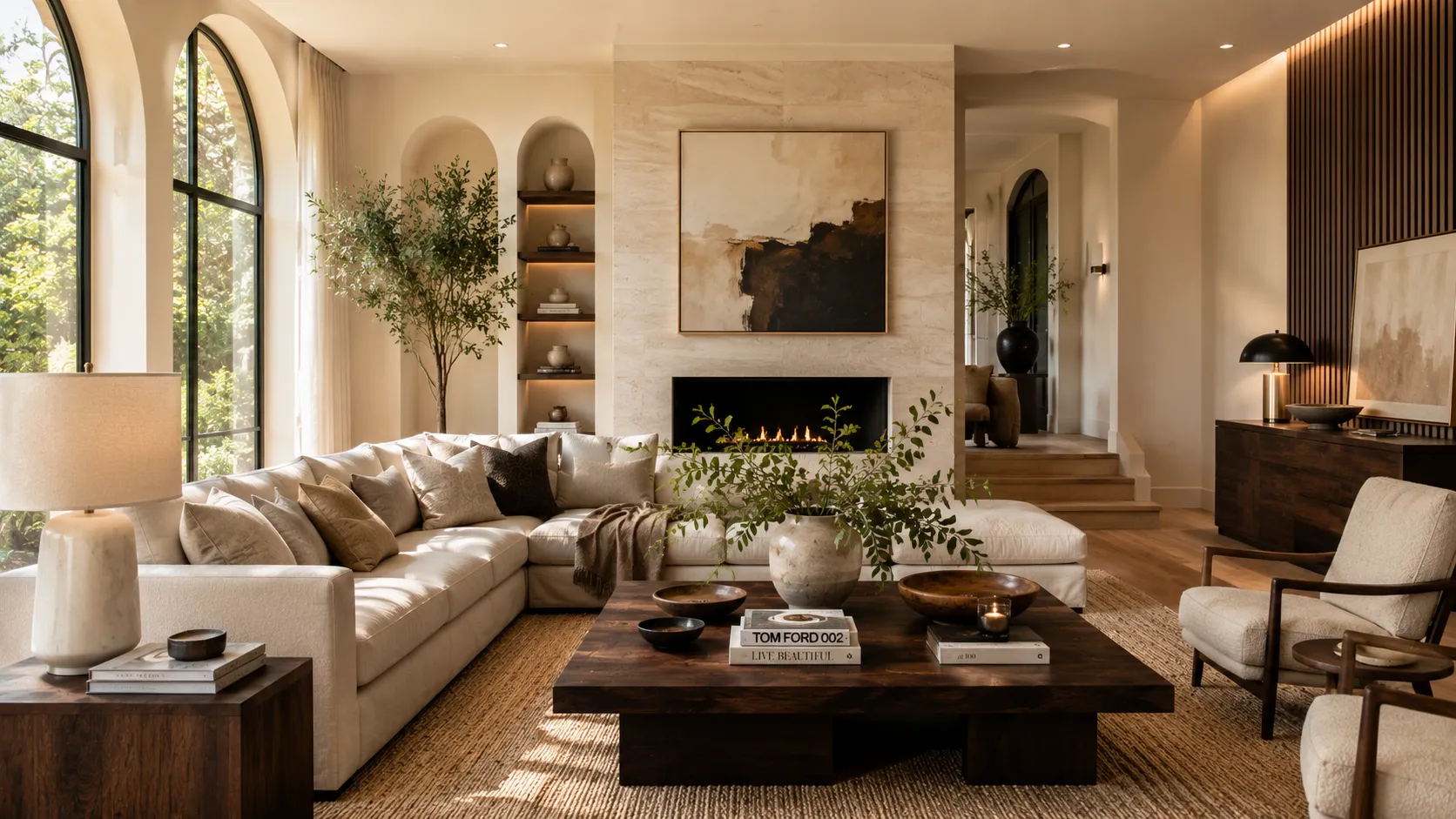
Professional designers intentionally combine light and dark woods because contrast adds depth, dimension, and visual interest.
For example:
- Light oak flooring with a dark walnut dining table
- White oak cabinetry with dark floating shelves
- Pale wood furniture paired with rich espresso accent pieces
Contrast naturally draws the eye around the room and prevents everything from blending together.
Think of wood finishes the same way you think about clothing—contrast creates style.
5. Let One Statement Piece Shine
Not every piece of furniture needs to command attention.
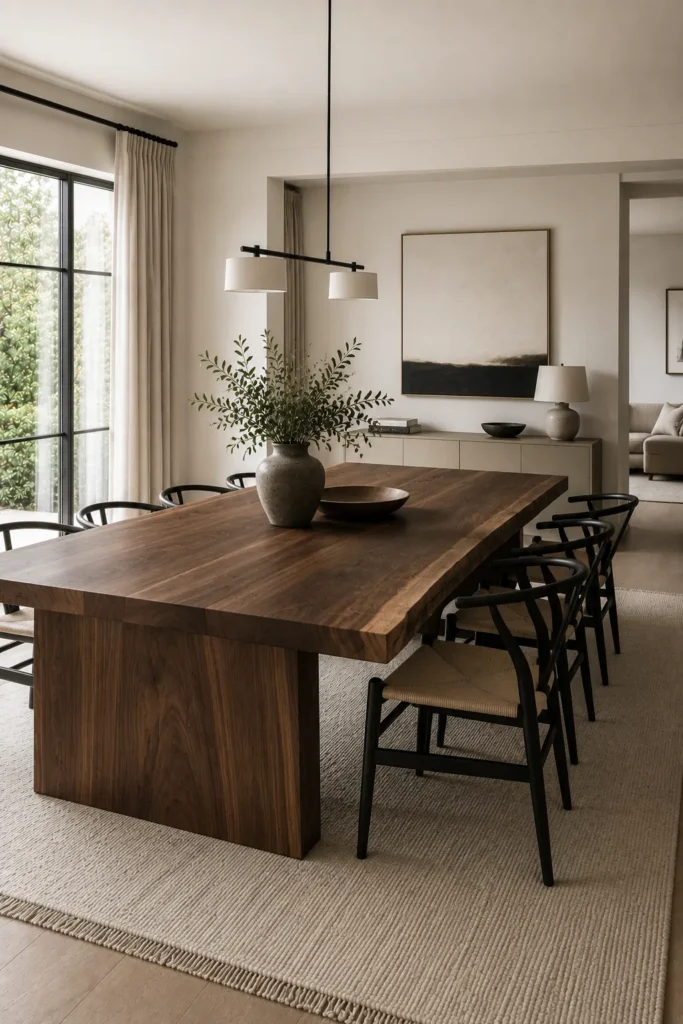
Instead, choose one beautiful wooden feature to become the room’s focal point.
This might be:
- A live-edge dining table
- A vintage walnut cabinet
- A sculptural coffee table
- A beautiful oak kitchen island
Allow surrounding furniture to play supporting roles through lighter or simpler finishes.
This creates hierarchy, making the space feel carefully curated instead of visually crowded.
6. Use Black as a Connecting Element
Here’s a trick you’ll notice in many professionally designed homes.
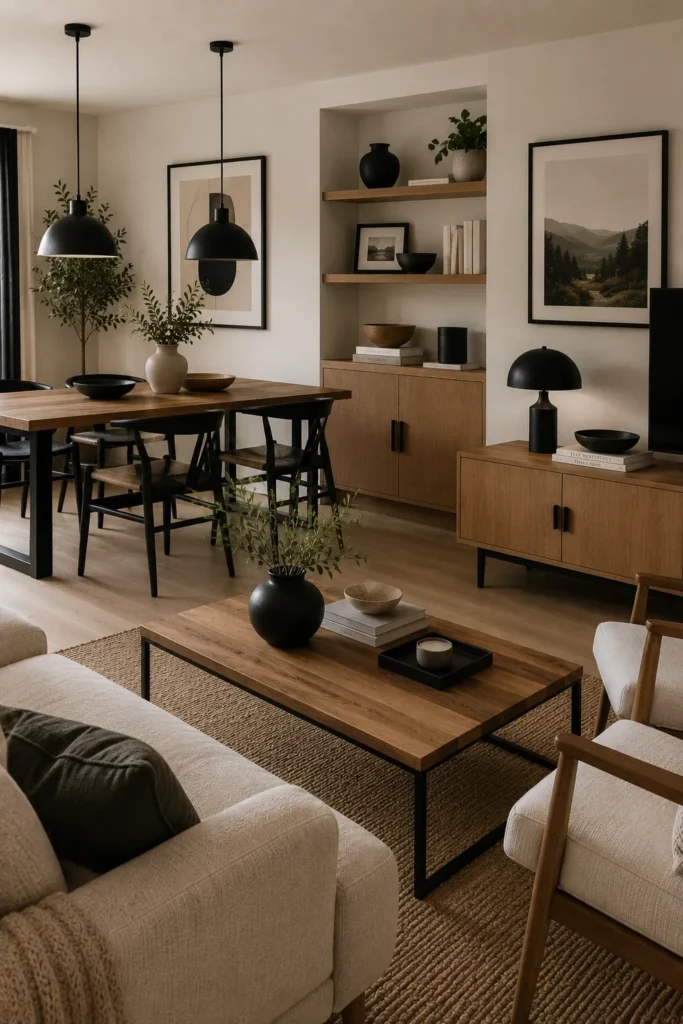
When several wood tones appear in one room, black accents help tie everything together.
Black provides visual structure while allowing different wood finishes to coexist naturally.
Consider adding:
- Black metal table legs
- Matte black lighting
- Black picture frames
- Cabinet hardware
- Window frames
- Decorative accessories
Because black is neutral, it acts like punctuation within the design, giving the eye places to rest.
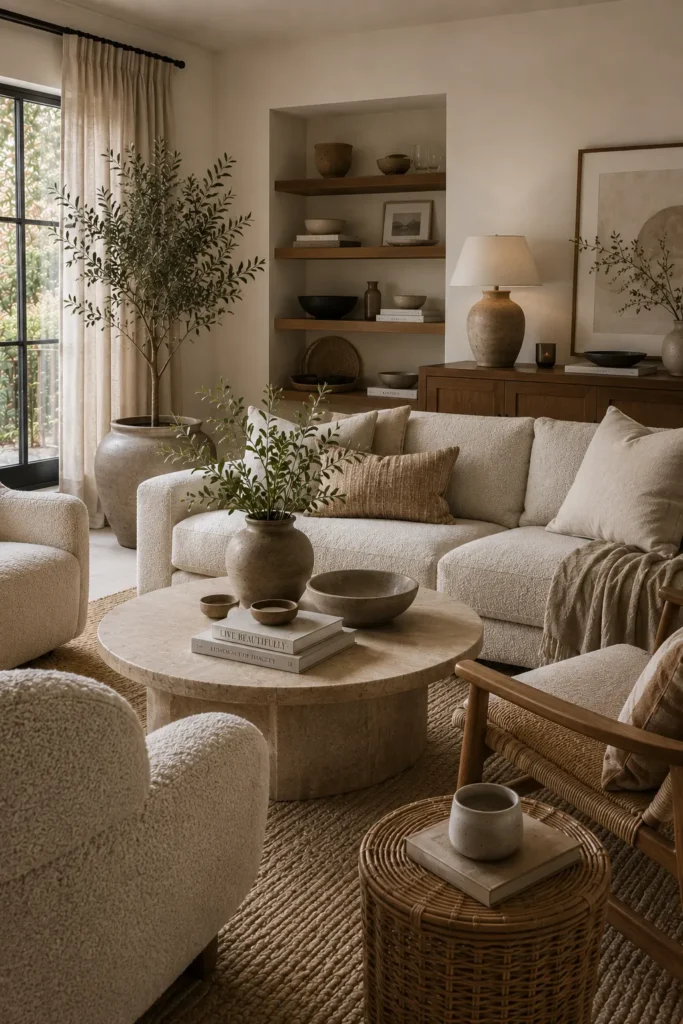
7. Layer Natural Textures Between Wood Finishes
Wood looks even better when it’s surrounded by complementary textures.
Natural materials soften transitions between different wood tones while adding warmth and depth.
Try combining wood with:
- Linen
- Cotton
- Bouclé
- Wool
- Stone
- Marble
- Rattan
- Woven baskets
- Ceramic pottery
Layering these materials prevents the room from feeling overly “woody” while creating the relaxed, welcoming atmosphere seen in high-end interiors.
8. Don’t Try to Match Everything
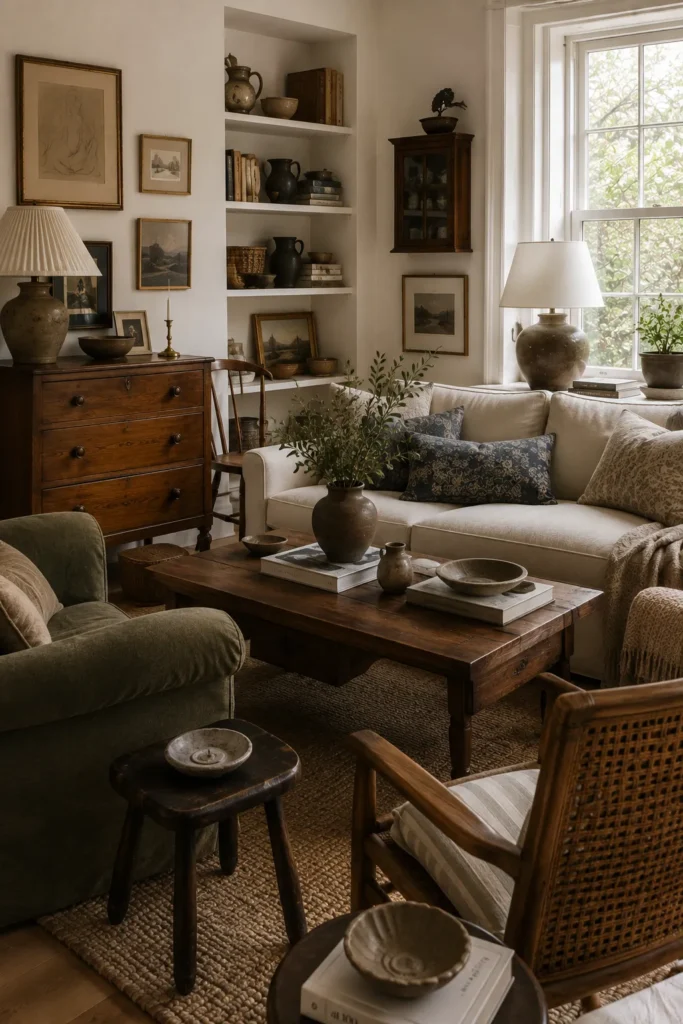
Perhaps the biggest decorating myth is that every wooden surface should be identical.
Matching every table, chair, cabinet, and floor often results in a space that feels more like a furniture showroom than a lived-in home.
Homes with personality evolve over time.
They combine heirloom pieces with modern furniture, vintage finds with new purchases, and different wood species that tell a richer story.
The goal isn’t perfect matching.
The goal is thoughtful harmony.
Common Mistakes to Avoid
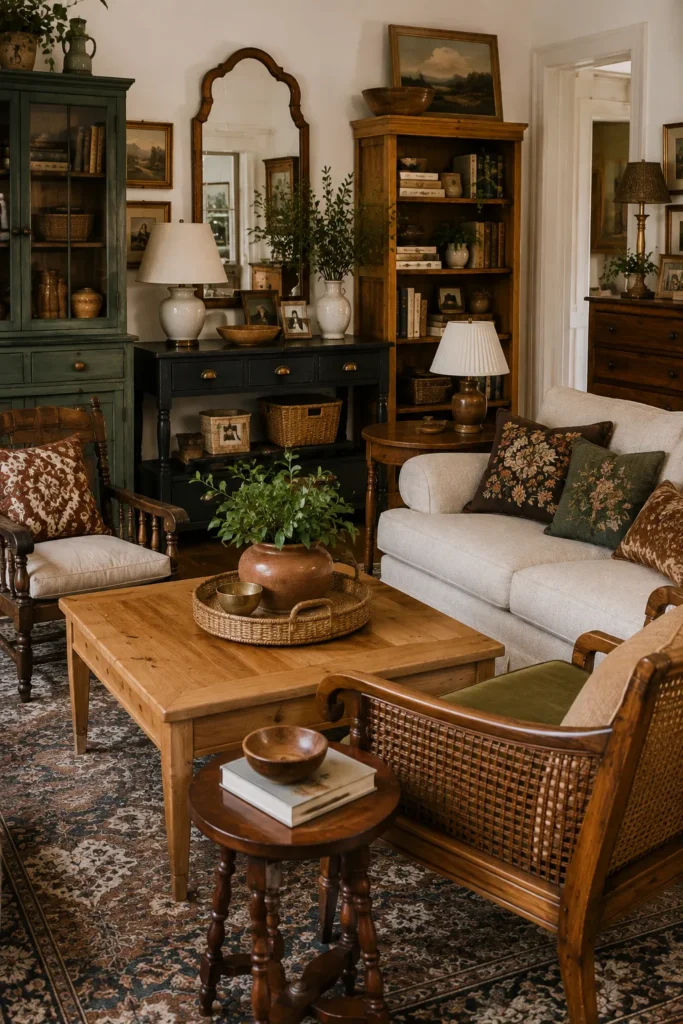
Even experienced decorators can make a few simple mistakes when mixing wood finishes.
Avoid these common pitfalls:
- Buying every piece from the same furniture collection.
- Mixing too many wood tones in a single room.
- Ignoring warm and cool undertones.
- Introducing one isolated wood finish without repeating it elsewhere.
- Forgetting to balance wood with soft textures and neutral materials.
Keeping these mistakes in mind will instantly make your rooms feel more polished.
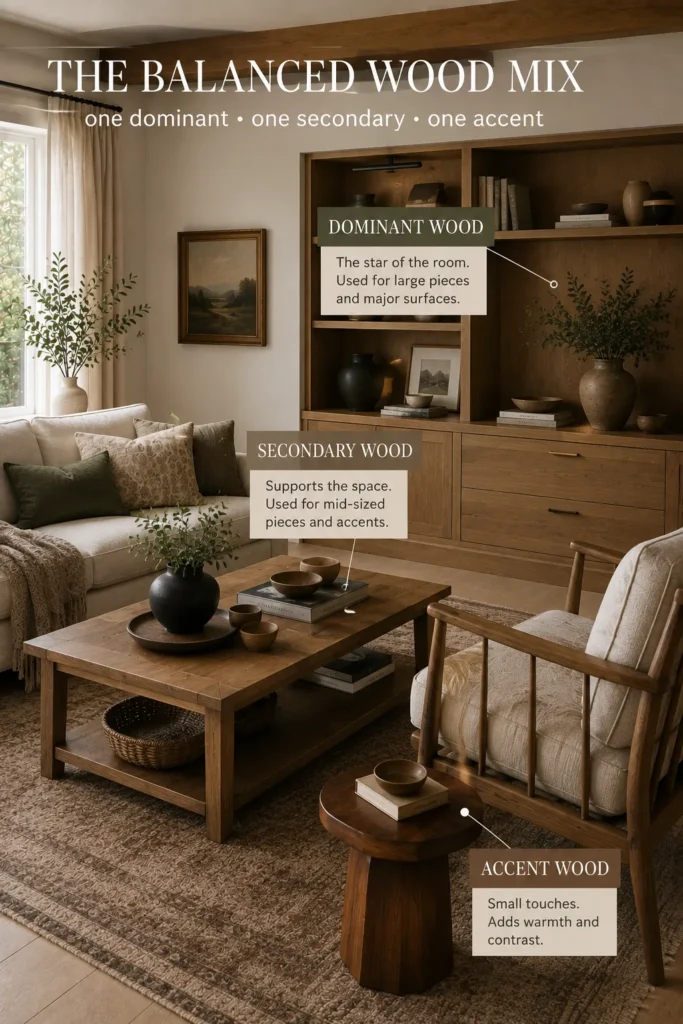
The Simple Designer Formula
Whenever you’re unsure, remember this easy rule:
60% – Dominant wood tone
30% – Secondary wood tone
10% – Accent wood tone
This balance creates enough variation to feel interesting while maintaining a cohesive overall look.
Frequently Asked Questions
Can you mix oak and walnut furniture?
Absolutely. Oak and walnut are one of the most popular designer combinations. The lightness of oak beautifully complements the rich depth of walnut.
Should wood flooring match furniture?
No. In fact, matching furniture exactly to the flooring often makes a room feel flat. Aim for complementary tones rather than identical finishes.
How many wood tones should you use in one room?
Two or three wood tones usually create the best balance. More than that can work, but only when repeated consistently throughout the space.
Can you mix warm and cool woods?
Yes—but it’s easier when you introduce a neutral wood tone or use black accents and textiles to bridge the contrast.
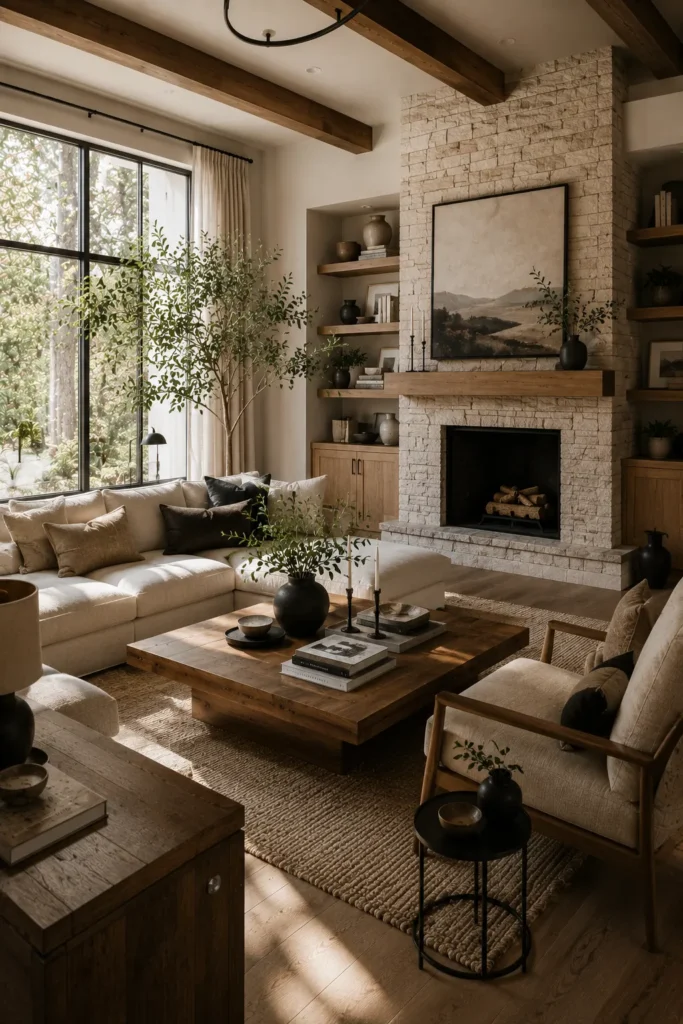
Final Thoughts
The most beautiful interiors aren’t built around perfect matching—they’re built around balance.
By choosing one dominant wood tone, repeating finishes throughout the room, paying attention to undertones, and embracing contrast, you can confidently mix different woods while creating a home that feels warm, layered, and effortlessly timeless.
Remember, your goal isn’t to make every piece match.
It’s to make every piece belong.