There’s a reason the best boutique hotels stay with you long after checkout. It isn’t the thread count, the expensive mattress, or even the designer furniture. It’s the atmosphere—the sense of calm that seems to slow time the moment you walk through the door.
The most memorable hotel bedrooms share something less obvious: every detail feels intentional. Nothing competes for attention, materials are chosen for the way they age and feel, and lighting softens every corner of the room. Instead of trying to impress with excess, they create luxury through restraint.
That philosophy is exactly what makes the organic modern bedroom one of the most enduring interior design styles today.
Organic modern combines the clean lines of contemporary design with the warmth of natural materials, layered textures, and a lived-in sense of comfort. It’s sophisticated without feeling formal, minimalist without becoming cold, and timeless enough to evolve with your home for years to come.
The good news? You don’t need a boutique hotel budget to recreate the feeling.
In this guide, you’ll learn the same design principles professional stylists use to create serene, luxury-inspired bedrooms—from building the perfect bed to choosing lighting, materials, and finishing touches that make a room feel complete rather than decorated.
Because the secret isn’t buying more.
It’s choosing better.
What “Organic Modern” Means in a Bedroom (And Why Hotels Get It Right)
Organic modern isn’t simply another neutral decorating trend.
It’s an approach to designing spaces that feel balanced, grounded, and deeply comfortable through thoughtful restraint.
Instead of relying on bold colors or decorative excess, an organic modern bedroom focuses on the relationship between natural materials, light, proportion, and texture. Every object has a purpose, every surface contributes to the mood, and empty space is treated as an essential design element rather than something that needs filling.
The result is a room that feels both elevated and effortless.
The Boutique Hotel Difference
Walk into a beautifully designed boutique hotel room and you’ll notice something surprising.
There is often less furniture than in an average home bedroom.
Fewer decorative accessories.
Fewer competing colors.
Yet somehow, the room feels richer.
That’s because luxury isn’t created through quantity—it’s created through quality and composition.
Hotels understand that our brains process a room long before we consciously notice its individual pieces. A limited palette of warm woods, tactile fabrics, soft lighting, and carefully edited styling immediately communicates relaxation.
Nothing distracts your eye.
Nothing feels accidental.
Everything works together to create a single emotional experience.
This principle is just as powerful at home.
Rather than asking “What else should I add?”, organic modern design encourages a different question:
“What deserves to stay?”
That subtle shift transforms the entire room.
Organic Modern vs. Cozy Farmhouse vs. Minimalism
Organic modern is often confused with other popular decorating styles, especially modern farmhouse and minimalism. While they share some visual similarities, their personalities are very different.
Organic Modern
An organic modern bedroom feels soft, tactile, and quietly luxurious.
You’ll typically find:
- warm oak or walnut wood
- linen bedding
- handmade ceramics
- boucle or wool textures
- sculptural lighting
- neutral color palettes inspired by nature
- simple forms with gentle curves
The emphasis is on natural beauty rather than decoration.
Cozy Farmhouse
Farmhouse interiors create warmth through nostalgia.
They often feature:
- distressed finishes
- rustic wood
- shiplap walls
- vintage signs
- decorative accessories
- traditional furniture details
While inviting, farmhouse styling tends to feel more layered and decorative than organic modern.
Minimalism
Minimalism strips a room back to its essentials.
Clean white walls, hidden storage, and minimal decoration create visual calm.
Organic modern borrows this sense of simplicity but softens it through natural materials and richer textures.
Instead of feeling clinical or stark, it feels warm and lived in.
Think of it this way:
- Minimalism removes.
- Farmhouse collects.
- Organic modern curates.
The Emotional Goal
Design trends come and go.
The feeling you’re trying to create should not.
The best organic modern bedrooms aren’t memorable because of expensive furniture or perfectly coordinated décor. They’re memorable because they support how you want to live.
Imagine waking up in a room where morning light filters through linen curtains, warm wood catches the sunlight, and every surface feels calm rather than cluttered.
Nothing is demanding your attention.
Your phone charger is hidden.
The bedside lamp casts a soft glow instead of harsh overhead light.
Natural textures invite you to slow down.
That feeling of quiet isn’t accidental.
It’s designed.
And that’s why this style has such lasting appeal. It doesn’t chase trends—it prioritizes comfort, balance, and timeless materials that become more beautiful with age.
As you work through the next steps, keep one idea in mind:
You’re not decorating a bedroom.
You’re creating an environment that helps you rest, recharge, and begin each day feeling more grounded.
Step 1 — Make the Bed the Architecture of the Room
Every beautiful bedroom begins with a single decision.
Not the wall color.
Not the nightstands.
Not even the lighting.
It begins with the bed.
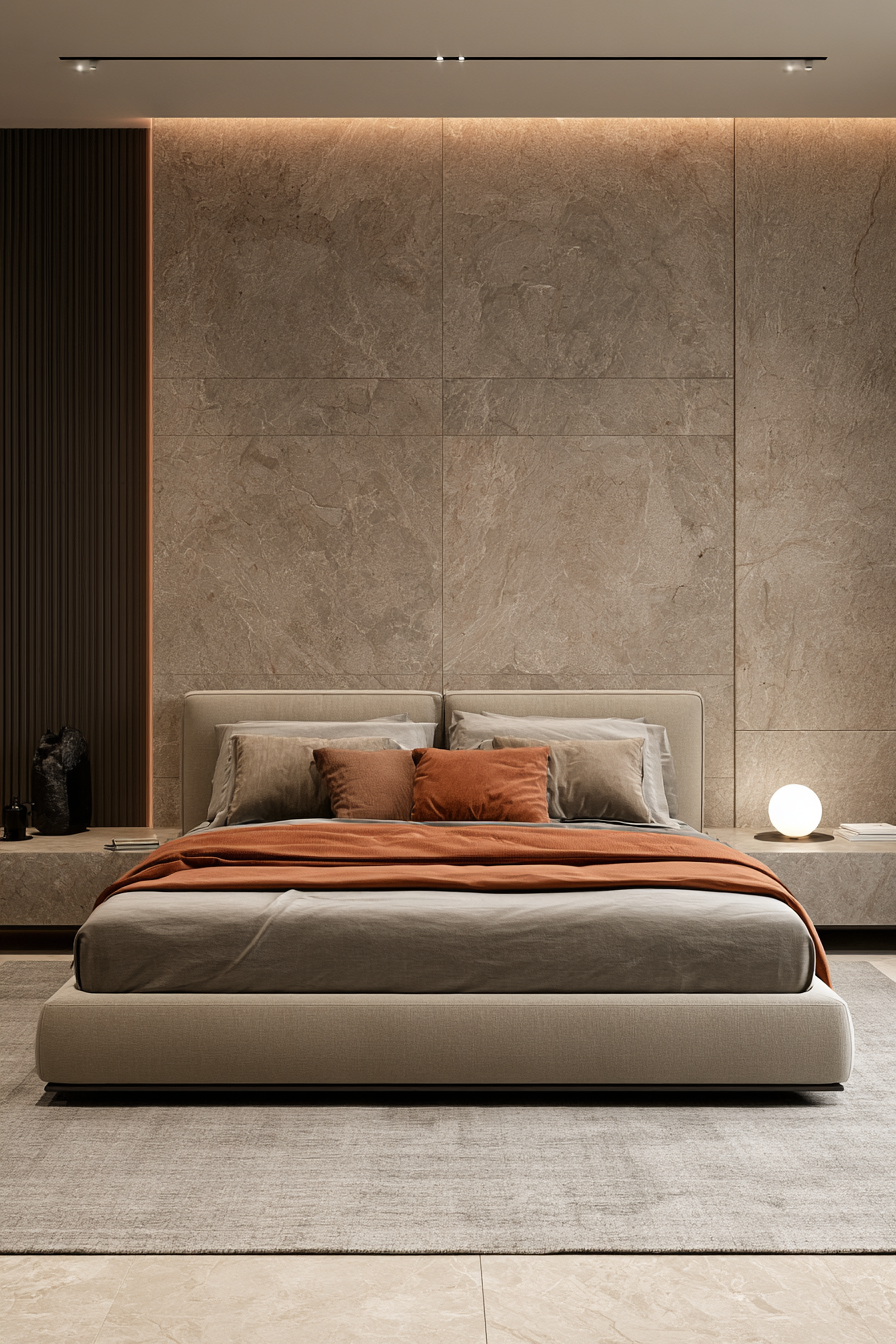
In a boutique hotel, the bed isn’t simply another piece of furniture—it is the architectural anchor of the entire room. Everything else exists to support it. Once you start looking for this, you’ll notice it everywhere: the bed is centered, generously scaled, and immediately commands attention without feeling overwhelming.
That’s exactly the mindset to bring into an organic modern bedroom.
Rather than treating the bed as something to decorate later, think of it as the foundation that determines every design choice that follows.
Why Hotel Beds Feel So Different
Luxury hotels understand an important design principle:
Scale creates presence.
Many homeowners instinctively choose furniture that feels “safe”—a modest headboard, compact bedside tables, small lamps. Ironically, these undersized pieces often make the room feel busier because nothing establishes a clear focal point.
Hotels do the opposite.
They create one dominant visual element, then allow everything else to support it.
The room instantly feels calmer because your eye knows exactly where to land.
Choose a Headboard with Presence
If you’re investing in one statement piece, make it the headboard.
A substantial headboard instantly elevates even the simplest bedroom, giving the space structure and a sense of permanence.
For an organic modern look, consider materials that add softness rather than visual weight:
- Upholstered linen headboards
- Bouclé fabric
- Warm oak or walnut frames
- Softly curved silhouettes
- Fluted wood detailing
- Rounded corners instead of sharp edges
Notice that none of these choices are flashy.
Their beauty comes from texture, craftsmanship, and proportion rather than ornament.
If your budget is limited, prioritize height over decoration. A tall, simple upholstered headboard often creates a far more luxurious impression than an ornate but shorter design.
WOW Territory Tip
Instead of hanging artwork first and choosing a headboard later, reverse the process. Once the bed has enough visual presence, you’ll naturally need less wall décor.
Center the Room Around the Bed
One of the simplest hotel-inspired tricks is also one of the most overlooked.
Whenever possible, center the bed on the room’s main wall.
Symmetry immediately creates visual calm.
Matching—or coordinating—nightstands on each side reinforce that balance, while leaving equal walking space makes the room feel more generous, even if the square footage is modest.
That doesn’t mean everything has to be identical.
Organic modern interiors often pair two similar nightstands with different table lamps or style each surface slightly differently. The overall composition feels balanced without becoming rigid.
Let Negative Space Do Its Job
A common decorating mistake is trying to fill every empty corner.
Luxury interiors do the opposite.
They allow the bed to breathe.
Leave space around the frame.
Avoid squeezing oversized furniture into every available wall.
Resist the urge to push a bench, chair, or storage piece into every gap simply because there’s room.
Empty space isn’t unfinished.
It’s what allows your best pieces to stand out.
Choose Furniture That Feels Intentional
When selecting bedroom furniture, consistency matters more than perfectly matching collections.
Instead of buying an entire bedroom set, think in terms of a material palette.
For example:
- an upholstered oatmeal linen bed
- walnut nightstands
- a travertine table lamp
- woven baskets
- brushed brass hardware
Although each piece is different, they speak the same design language.
This layered approach creates the collected, boutique feel that’s nearly impossible to achieve with matching furniture packages.
Step 2 — Layer Bedding Like a Designer, Not Like a Store Display
If the bed is the architecture of the room, the bedding is where comfort becomes visible.
One of the easiest ways to spot a professionally styled bedroom is by looking at the layers.
Luxury hotels rarely rely on matching bedding sets. Instead, they build depth gradually, combining different materials that invite you to touch them.
The result feels effortless—even though every layer has been carefully considered.
Start with a Neutral Foundation
Organic modern bedrooms aren’t about stark white.
They’re about warm neutrals inspired by nature.
Think:
- ivory
- oat
- flax
- sand
- mushroom
- soft clay
- warm greige
- natural linen
These colors create an atmosphere rather than demanding attention.
The goal isn’t to make the bed disappear.
It’s to make it feel irresistibly inviting.
The Designer Layering Formula
Rather than buying a complete bedding set, build your bed one layer at a time.
A timeless formula looks like this:
- Crisp fitted sheet
- Flat sheet (optional but wonderfully hotel-like)
- Plush duvet insert
- Linen or cotton duvet cover
- Lightweight quilt or coverlet folded across the lower third
- Textured throw casually draped at the foot
- Carefully chosen pillows
Every layer introduces another opportunity for texture.
Instead of creating contrast with color, organic modern design creates contrast through materials.
Imagine combining:
- washed linen
- crisp cotton
- chunky knit wool
- bouclé
- waffle weave
- brushed cotton
- lightweight cashmere
The palette remains quiet, but the bed becomes visually rich.
Texture Matters More Than Color
Many people assume neutral bedrooms are boring.
In reality, they’re only boring when every surface feels the same.
If your duvet, throw pillows, blanket, curtains, rug, and upholstery all share one smooth cotton finish, the room falls flat.
Instead, layer contrasting textures.
For example:
A linen duvet.
A chunky wool throw.
Velvet accent cushions.
A bouclé bench.
A woven jute rug.
Suddenly the room feels multidimensional without introducing a single bold color.
Texture is what makes organic modern interiors feel expensive.
Forget Perfectly Matching Bedding Sets
Matching bedding collections were designed to make shopping easier—not rooms more beautiful.
Hotels almost never use them.
Instead, they mix complementary tones.
Cream pillows with oatmeal linen.
Ivory sheets beneath a flax-colored duvet.
A warm taupe throw across soft white bedding.
The subtle variation creates movement while maintaining a calm overall palette.
Nothing feels forced.
Everything feels collected.
Pillows: Less Than You Think
There was a time when luxury meant covering the bed with a dozen decorative cushions.
Thankfully, that era is fading.
Organic modern styling embraces restraint.
A comfortable arrangement might include:
- two sleeping pillows per person
- two larger Euro shams for height
- one lumbar pillow or a single textured accent cushion
That’s it.
Enough layers to feel luxurious.
Not so many that you spend five minutes removing pillows every evening.
Let Bedding Look Lived In
One final secret separates boutique hotels from furniture showrooms.
Perfection isn’t the goal.
Organic modern embraces softness.
Allow linen to wrinkle naturally.
Drape the throw rather than folding it with military precision.
Let fabrics settle instead of forcing every corner into place.
Those subtle imperfections are what make the room feel authentic.
A bedroom should invite you to climb into bed—not make you nervous about disturbing the styling.
Designer Takeaway
If you’re working with a limited decorating budget, invest in your bedding before buying more décor.
High-quality linen, layered textures, and a thoughtfully styled bed will transform the entire room far more dramatically than another decorative accessory ever could.
After all, in an organic modern bedroom, the bed isn’t just where you sleep.
It’s the heart of the space.
Step 3 — Get the Lighting Layers Right
If there’s one detail that instantly separates a thoughtfully designed bedroom from an ordinary one, it’s lighting.
Most bedrooms rely on a single ceiling fixture that floods the room with bright, even light. It’s practical for getting dressed or folding laundry, but it does very little to create the calm, intimate atmosphere we associate with luxury hotels.
Walk into almost any boutique hotel, and you’ll notice something different.
The overhead light is rarely the star of the room.
Instead, light comes from multiple sources at different heights, creating depth, softness, and a sense of quiet that can’t be achieved with one fixture alone.
This layered approach is one of the defining features of an organic modern bedroom, and fortunately, it’s also one of the easiest upgrades to make.
Think in Layers, Not Fixtures
Professional designers rarely ask, “What ceiling light should we choose?”
Instead, they ask, “How will this room feel at different times of day?”
Morning, reading in bed, getting ready for work, winding down before sleep—each moment requires a different quality of light.
The easiest way to achieve this is by following the three-layer lighting rule.
Ambient Lighting
Ambient lighting provides the room’s overall illumination.
This usually comes from a ceiling fixture, recessed lights, or a flush mount, but the goal isn’t maximum brightness. Instead, choose a fixture that complements the room’s architecture while producing a soft, even glow.
Organic modern spaces favor sculptural simplicity over ornate details. Look for:
- Linen drum shades
- Frosted glass globes
- Natural woven pendants
- Plaster or ceramic finishes
- Matte black or aged brass accents
Avoid fixtures that feel overly industrial or overly glamorous. The focus should remain on warmth and simplicity.
Task Lighting
Task lighting supports specific activities, most notably reading in bed.
Bedside lamps are often treated as an afterthought, yet they have an outsized impact on the room’s overall character.
Instead of choosing the smallest lamp that fits on your nightstand, consider scale.
A generously proportioned ceramic lamp with a linen shade feels far more luxurious than a tiny decorative lamp that struggles to provide enough light.
Wall-mounted sconces are another excellent option, especially in smaller bedrooms. They free up surface space while giving the room a custom, built-in look often found in boutique hotels.
When selecting bedside lighting, ask yourself one question:
Would I actually enjoy reading here for an hour?
If the answer is no, keep looking.
Accent Lighting
The final layer is what transforms a functional bedroom into an atmospheric retreat.
Accent lighting isn’t about brightness—it’s about mood.
A softly illuminated corner, a picture light above artwork, or a discreet LED strip behind a headboard introduces subtle dimension after sunset.
Even a candle or a beautifully designed diffuser with a gentle glow contributes to the feeling.
These small moments of light create visual rhythm throughout the room and encourage your eyes to relax rather than constantly adjusting to a single bright source.
Choose Warm Light—Always
One of the quickest ways to make even the most beautiful bedroom feel cold is using bulbs with a cool blue-white temperature.
Luxury hotels almost universally favor warm light because it flatters natural materials, softens skin tones, and encourages relaxation.
For most bedrooms, choose bulbs around 2700K (warm white). If you prefer an especially cozy atmosphere in the evening, 2200K–2400K can create an almost candlelit effect.
Equally important is consistency.
Mixing warm and cool bulbs in the same room creates subtle visual tension, even if you can’t immediately identify why the space feels “off.”
Install Dimmers Wherever Possible
Few upgrades have a greater impact for so little cost than dimmer switches.
A bedroom shouldn’t feel the same at 7:00 AM as it does at 10:00 PM.
Being able to gradually lower the light transforms everyday routines into rituals.
Reading becomes more enjoyable.
Evening conversations feel calmer.
Preparing for sleep becomes easier.
Good lighting doesn’t simply illuminate a room—it shapes your experience of it.
Let Light Interact with Natural Materials
Organic modern interiors become especially beautiful because light doesn’t just fill the room—it interacts with every surface.
Morning sunlight filtering through linen curtains.
A ceramic lamp casting soft shadows across textured walls.
Walnut furniture glowing under warm evening light.
The gentle weave of a wool throw catching subtle highlights.
These moments are impossible to replicate with synthetic finishes or overly glossy materials.
The richer your material palette, the more rewarding your lighting becomes.
WOW Territory Tip
Before buying another decorative object, ask yourself if the room would benefit more from another source of soft light.
The answer is surprisingly often yes.
A beautifully chosen lamp contributes to both function and atmosphere—two qualities that define truly timeless interiors.
Step 4 — Choose a Material Palette That Feels Grounded
One of the reasons organic modern interiors feel so calming is that they rarely rely on color for visual interest.
Instead, they build richness through materials.
Wood beside stone.
Linen against wool.
Handmade ceramics paired with woven fibers.
Each surface contributes something unique, yet together they create a cohesive whole that feels effortless rather than decorated.
This approach is especially valuable in the bedroom, where visual harmony matters far more than bold statements.
Limit Your Palette
A common misconception is that creating an organic modern home requires collecting dozens of natural materials.
In reality, the opposite is true.
The most sophisticated rooms often rely on a surprisingly restrained palette.
As a starting point, choose just a handful of core materials and repeat them throughout the space.
For example:
- One primary wood tone
- One natural woven fiber
- Soft layered textiles
- One stone or ceramic accent
- One warm metal finish
Repeating these elements creates continuity, allowing the room to feel intentionally designed rather than assembled over time.
Choose One Dominant Wood Tone
Wood introduces warmth faster than almost any other material.
Rather than mixing several different finishes, commit to one primary tone that anchors the room.
Walnut adds depth and richness.
White oak feels light and contemporary.
Ash offers subtle grain with a Scandinavian influence.
Whatever you choose, let it appear in several places—perhaps the nightstands, dresser, picture frames, or a bench at the foot of the bed.
Repetition creates rhythm.
Layer Soft Natural Textiles
The bedroom should feel as comfortable as it looks.
Natural fibers help achieve both.
Consider incorporating:
- Washed linen bedding
- Wool throws
- Cotton quilts
- Bouclé upholstery
- Jute or wool rugs
- Linen curtains
Each introduces a slightly different tactile quality while remaining visually quiet.
This layering is what gives boutique hotel rooms their unmistakable sense of comfort.
You don’t notice individual fabrics.
You notice how the room makes you feel.
Add Stone and Handmade Ceramics
Hard materials are just as important as soft ones.
Travertine, marble, limestone, and handmade ceramics provide visual weight that balances the softness of bedding and textiles.
A stone tray on a nightstand.
A ceramic table lamp.
A hand-thrown vase with a single branch.
These details introduce subtle variation without overwhelming the room.
Organic modern design celebrates materials that reveal their imperfections rather than hiding them.
Tiny variations in glaze.
Visible grain.
Natural veining.
These characteristics make a space feel authentic.
Warm Metals as Quiet Accents
Metal should support the room—not dominate it.
Brushed brass, antique bronze, and matte black all pair beautifully with natural materials.
Use them sparingly:
- Drawer pulls
- Picture lights
- Lamp bases
- Curtain rods
- Mirror frames
When repeated consistently, these small details quietly tie the entire room together.
Build Your Color Palette from Nature
Color still matters—but in organic modern interiors, it’s inspired by landscapes rather than trends.
Instead of stark black-and-white contrasts, look to earth for inspiration.
Imagine the colors of a windswept coastline:
- warm white
- sand
- oat
- clay
- mushroom
- walnut
- olive
- soft sage
- weathered stone
These tones work together because we’ve been seeing them together for centuries.
They never compete.
They simply coexist.
Avoid the “Beige on Beige” Trap
One criticism often directed at neutral interiors is that they can feel flat.
The problem isn’t the color.
It’s the lack of variation.
If every surface shares the same tone and the same texture, the room loses dimension.
Instead of introducing bright accent colors, introduce contrasting finishes.
Smooth linen beside chunky wool.
Matte ceramics beside polished stone.
A woven basket beside an upholstered bench.
Raw wood beside soft cotton.
The room remains quiet, yet never feels one-dimensional.
Designer Takeaway
When decorating an organic modern bedroom, think less like a shopper and more like a curator.
You aren’t collecting beautiful objects.
You’re assembling a family of materials that speak the same language.
When every piece shares that quiet conversation, the room begins to feel timeless—not because it’s perfectly styled, but because nothing feels out of place.
Step 5 — Edit Ruthlessly (The Real Hotel Secret)
There is one design principle that almost every luxury hotel understands, yet many homeowners overlook:
Calm comes from editing.
When guests enter a beautifully designed hotel room, they rarely think, “There are so many beautiful things here.”
They think:
“This feels peaceful.”
That feeling is created through restraint.
A boutique hotel room has been carefully edited so that every element earns its place. There is no unnecessary furniture competing for attention, no random decorations collecting dust, and no surfaces overwhelmed by everyday clutter.
The room feels effortless because someone made hundreds of intentional decisions behind the scenes.
Your bedroom deserves the same level of consideration.
The Luxury of Empty Space
One of the biggest differences between ordinary bedrooms and professionally styled spaces is how they treat empty space.
Many homes treat an empty surface as a problem to solve.
A blank wall needs artwork.
An empty corner needs furniture.
A bedside table needs accessories.
But designers understand something important:
Visual breathing room is part of the design.
A beautifully styled nightstand with only three carefully chosen objects often feels more luxurious than a surface covered with candles, books, plants, jewelry, chargers, and decorative items.
The goal is not to create a room that looks empty.
The goal is to create a room where your eye can rest.
The Nightstand Styling Formula
The bedside table is one of the most personal areas in a bedroom.
It should support your evening rituals while still maintaining a sense of calm.
A simple organic modern arrangement might include:
1. A beautiful lamp
This is your functional anchor.
Choose something with character—a ceramic base, natural stone, textured shade, or sculptural silhouette.
2. Something living or natural
A small branch in a handmade vase.
A seasonal flower.
A simple plant.
Nature brings softness and movement into the room.
3. One personal object
A favorite book.
A vintage piece.
A meaningful photograph.
A small object collected during travel.
The key word is one.
The most memorable rooms don’t display everything they love.
They highlight what matters most.
Hide the Modern-Day Clutter
Nothing interrupts a peaceful bedroom faster than visual noise.
The organic modern aesthetic works because it creates a feeling of simplicity—even when the room contains everything needed for daily life.
Small changes make a significant difference:
- Use a cable box or hidden cable clips for chargers.
- Store extra blankets in a woven basket.
- Keep beauty products organized rather than scattered.
- Choose closed storage whenever possible.
- Avoid letting laundry become part of the room’s visual landscape.
A bedroom should communicate rest.
Not unfinished tasks.
Let Storage Support the Design
Good storage is not about hiding everything away.
It’s about creating a balance between accessibility and calm.
Consider:
- A beautiful wooden dresser instead of multiple small storage pieces.
- Built-in wardrobes with clean fronts.
- Under-bed storage for seasonal items.
- Matching woven baskets for practical items.
The fewer visual interruptions a room has, the more luxurious it feels.
Step 6 — Add the One Personal Detail That Keeps It From Feeling Like a Showroom
There is a delicate balance in organic modern design.
Too much decoration creates clutter.
Too little personality creates a space that feels like a furniture showroom.
The difference?
One meaningful detail.
Luxury hotels understand this perfectly.
The best boutique hotels don’t feel anonymous. They often include something that connects the room to a place, a story, or a feeling.
Maybe it’s local artwork.
A vintage chair.
A handmade ceramic piece.
A signature scent.
A stack of carefully selected books.
These details create emotional connection.
Your bedroom should do the same.
Choose Something With a Story
The most beautiful objects are rarely the most expensive.
They are the ones that mean something.
Consider adding:
Artwork
Instead of mass-produced prints chosen only because they match the color palette, look for pieces that create a feeling.
Abstract landscapes.
Photography from a meaningful place.
A vintage painting from a flea market.
A handmade textile.
Art doesn’t need to dominate the room.
Sometimes the quietest pieces have the greatest impact.
Vintage Elements
Organic modern interiors become warmer when they include something with history.
A vintage wooden stool.
An antique mirror.
A ceramic vase with an imperfect glaze.
A small object inherited from family.
These pieces prevent the room from feeling overly new or carefully staged.
They introduce character.
Scent as Part of the Design
A room isn’t experienced only visually.
Scent plays a powerful role in creating memories.
Boutique hotels often use signature fragrances because they understand that atmosphere is multisensory.
For a calming bedroom, consider:
- cedarwood
- sandalwood
- lavender
- fig
- amber
- eucalyptus
A candle, diffuser, or natural room spray can become part of your evening ritual.
Books and Personal Collections
A few carefully chosen books add instant warmth.
Place them:
- on a bedside table
- on a bench
- stacked beneath a lamp
- on an open shelf
Choose books that reflect your interests, travels, or aesthetic.
The goal isn’t decoration.
It’s creating a glimpse into the person who lives there.
Mistakes to Avoid in an Organic Modern Bedroom
Creating a calm, boutique hotel-inspired bedroom is less about adding more elements and more about avoiding choices that disrupt the atmosphere.
Here are the most common mistakes.
Mistake #1: Using Matching Bedding Sets
A complete bedding collection may seem convenient, but it often creates a flat, showroom-like appearance.
Instead, mix:
- different fabrics
- slightly varied neutral tones
- contrasting textures
A layered bed feels more luxurious because it looks collected rather than purchased all at once.
Mistake #2: Too Many Small Decorative Objects
Small items create visual fragmentation.
A dozen tiny accessories rarely feel more luxurious than one beautiful statement piece.
Replace collections of objects with intentional choices:
One sculptural vase.
One beautiful lamp.
One piece of art.
One meaningful item.
Mistake #3: Ignoring Window Treatments
Windows are often one of the largest visual elements in a bedroom, yet they are frequently treated as an afterthought.
The wrong curtains can make an otherwise beautiful room feel unfinished.
For an organic modern bedroom, consider:
- linen curtains
- textured cotton panels
- natural woven shades
- floor-length drapery
Avoid curtains that stop awkwardly above the floor or feel too thin and temporary.
Window treatments should soften the architecture of the room.
Mistake #4: Relying Only on Overhead Lighting
A beautiful bedroom can still feel uncomfortable under harsh ceiling lights.
Remember the hotel formula:
Layer.
Soften.
Dim.
The goal isn’t simply to see the room.
It’s to feel good inside it.
Mistake #5: Chasing Trends Instead of Creating Longevity
Organic modern has become popular because it represents something many people crave: calm.
But the style should never become a checklist of trendy items.
You do not need every:
- boucle chair
- curved sofa
- travertine table
- beige accessory
- woven basket
A timeless room is built around principles, not products.
Choose pieces because they support your lifestyle, not because they are currently everywhere online.
The Boutique Hotel Formula: Your Organic Modern Bedroom Checklist
Creating this look at home comes down to six essential principles:
✓ Start with the bed — make it the architectural focal point.
✓ Layer textures — create richness through materials, not excessive color.
✓ Create lighting layers — combine ambient, task, and accent lighting.
✓ Choose natural materials — wood, linen, stone, ceramics, and woven fibers create warmth.
✓ Edit intentionally — remove visual noise and allow space to breathe.
✓ Add personality — include one meaningful detail that tells your story.
Conclusion: Luxury Is a Feeling, Not a Price Tag
The most beautiful bedrooms are not necessarily the largest or the most expensive.
They are the ones that understand how people want to feel.
An organic modern bedroom works because it combines two things we naturally respond to:
The simplicity of order.
And the comfort of nature.
The boutique hotel feeling doesn’t come from copying a five-star suite or filling your room with designer furniture.
It comes from thoughtful choices:
A beautifully layered bed.
Warm, flattering light.
Natural materials that invite touch.
A calm palette.
Objects chosen with intention.
A space where everything has a reason to exist.
Start with one change.
Upgrade your bedding.
Replace a harsh lamp.
Clear your nightstand.
Add a natural texture.
Small decisions compound.
And slowly, your bedroom transforms from simply a place where you sleep into a private retreat—a space that welcomes you home every day.
Because true luxury isn’t about having more.
It’s about creating more meaning with what you choose to keep.