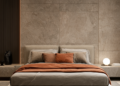

Two livingrooms can have almost the same furniture, the same paint color, even a similar budget — and one feels effortless the moment you walk in while the other feels slightly “off” in a way you can’t quite name. You’re not imagining it, and it’s not about taste. It’s something your brain is processing before you’ve even registered a single object: proportion, repetition, rhythm and balance.
None of this is about decoration in the way most articles frame it. It’s closer to visual grammar. And once you understand the rules your eye is already using without your permission, you start being able to diagnose exactly why a room feels wrong — and fix it without buying a single new thing.
Why This Isn’t About Decoration at All
The most common mistake in decorating is assuming a beautiful room comes down to better objects — nicer furniture, a more expensive rug, the right shade of paint. Objects matter, but they’re not what your brain evaluates first.
Before you consciously notice a single piece of furniture, your visual system has already processed the relationships between things in the room — how big they are relative to the space, whether they repeat any shape or tone, whether the room’s visual weight sits evenly or lopsided. This happens in a fraction of a second, well before the analytical part of your brain starts naming what it likes.
This is why two rooms with nearly identical furniture can feel completely different. The furniture isn’t the variable. Its placement, scale and relationship to everything else is.
Proportion: The Rule the Eye Notices Before Anything Else
Proportion is the first thing your brain checks, and it’s checking a simple question: does this object make sense next to everything around it?
Furniture scale relative to the room matters more than the furniture itself. A gorgeous sofa that’s slightly too small for its living room will always look wrong, no matter how well-made it is — because the eye is comparing it to the volume of the room, not judging it in isolation. This is why a “budget” sofa correctly sized for its space frequently reads as more considered than a beautiful one that’s undersized.
The “one size too small” trap. People consistently buy furniture slightly smaller than a room calls for, usually out of a instinct to “leave room to move” or a hesitation about committing to something large. The result almost always reads as sparse and cheap rather than open and cozy, because too much empty floor around an undersized piece doesn’t register as generous space — it registers as a mismatch.
Common Mistake: Choosing a rug that’s too small for the seating area around it. This is one of the single most common proportion errors in American living rooms — a rug that only the coffee table sits on, with all the furniture legs off it, visually shrinks the whole room instead of grounding it.
Ceiling height, negative space and why emptiness can feel luxurious. A room with a few well-proportioned pieces and generous empty space around them almost always reads as more expensive than a room stuffed with furniture, even at the exact same budget. Negative space isn’t absence — to the eye, it’s confirmation that everything present was chosen deliberately, not just accumulated to fill the room.
Repetition and Rhythm: How the Brain Decides a Room Is “Put Together”
This is the part almost nobody names directly, and it explains an enormous amount of what separates a “collected” room from a “random” one.
The brain rewards pattern recognition. When a material, tone or shape appears more than once across a room — the same wood finish on two different pieces, the same curve echoed in a mirror and a chair, the same warm brass on two light fixtures — your visual system registers it as intentional, and intentional reads as beautiful. A single instance of anything, no matter how lovely, doesn’t get read as a decision. Repetition is what turns an object into evidence of a plan.
The rule of three and visual rhythm. Objects grouped in threes, at varied heights, create a sense of rhythm the eye can follow comfortably — it’s enough repetition to feel deliberate without becoming monotonous. Pairs tend to feel static; scattered singles feel disconnected; three related but not identical objects create movement the eye enjoys tracking.
Styling Rule: Choose one material or tone and repeat it at least three times across a room — once in furniture, once in a smaller object, once in a textile. This single habit does more to make a room feel “designed” than almost any individual purchase.
What happens with no repetition at all versus too much. A room with zero repeated elements feels chaotic — nothing anchors the eye, and it has to work harder than it wants to just to make sense of the space. A room with too much repetition (the same color and material on every single surface) feels flat and monotonous instead, because there’s no rhythm left, only uniformity. The goal sits in the middle: enough repetition to feel intentional, enough variation to stay alive.
Balance: Why Both Symmetry and Asymmetry Can Feel Calm
Balance is where a lot of people get stuck, because they assume it only means symmetry — mirror-image matching on either side of a room. That’s one form of balance, but not the only one, and understanding the difference explains a lot about why some asymmetric rooms feel just as calm as perfectly matched ones.
Formal symmetry reads as “settled.” Two matching nightstands and lamps flanking a bed, or matching chairs on either side of a fireplace, create an immediate sense of order and calm. This is why symmetry is so common in traditional and formal interiors — it requires very little visual effort to process, which the brain interprets as restfulness.
Visual (asymmetric) balance feels more alive. A large armchair on one side of a room can be balanced by a smaller cluster of two objects — a floor lamp and a side table — on the other, without either side matching. What makes this work is equal visual weight, not equal object count. A big, solid piece can be balanced by a few smaller ones with the right combined presence, and the result often feels more dynamic and personal than strict symmetry.
How an unbalanced room creates subconscious tension. A room where all the visually “heavy” elements — dark furniture, large art, dense texture — sit on one side, with the other side left comparatively bare, creates a low-grade unease most people can feel without being able to explain. Nothing is technically wrong with any single object; the discomfort comes entirely from the uneven distribution of visual weight across the space.
Why Some Rooms Feel Expensive Regardless of Budget
This is where the three principles above actually converge, and it’s the real explanation behind “expensive-feeling” rooms that have nothing to do with the size of anyone’s budget.
A room with correctly proportioned furniture, a clear repeated material story, and balanced visual weight will read as calm and considered even if every piece in it was inexpensive. A room with beautiful, costly furniture that’s undersized for the space, has no repetition tying pieces together, and leaves all its visual weight lopsided on one side will read as “trying” rather than settled — no matter what anything cost.
Material and lighting quality absolutely amplify the effect once these three structural principles are in place — that’s the layer covered in warmth and luxury-focused styling advice elsewhere. But they’re amplifiers, not the root cause. A gorgeous velvet sofa in the wrong proportion, with nothing repeating its tone anywhere else in the room, still won’t produce the “expensive” feeling on its own.
Common Mistakes That Create Subconscious Discomfort
Furniture floating without anchor or grouping. Pieces spaced too far apart with no rug, no shared material, and no clear grouping create a scattered feeling, even if each individual piece is beautiful.
Uneven visual weight across a room. As covered above, this is one of the most common sources of a room feeling subtly “off” without an obvious cause.
Too much competing pattern or color breaking the rhythm. When every textile in a room introduces a new color or pattern instead of echoing something already present, the eye never settles into a rhythm — it’s constantly processing something new.
No repeated element tying the room together. A room built entirely from one-off purchases, each chosen independently without reference to anything else in the space, almost always feels less cohesive than one built around even one or two repeated materials or tones.
How to Apply This in Your Own Home
You don’t need to redesign a room to test these principles — a short walk-through exercise reveals almost everything.
Check proportion first. Stand in the doorway and ask whether your main furniture pieces feel appropriately scaled to the room, or slightly lost in it. If a piece feels small relative to the space, it’s very likely undersized rather than intentionally minimal.
Find your repeated element. Look for a material or tone that shows up at least twice in the room already. If nothing repeats, that’s usually the single fastest fix — choose one existing material (a wood tone, a metal finish, a color) and add it deliberately in one more place.
Assess balance last. Stand at the room’s main entry point and notice whether one side feels visually heavier than the other. If it does, the fix is rarely about removing something — it’s usually about adding a modest amount of visual weight to the lighter side, or shifting one piece across.
These three checks, run in order, diagnose the overwhelming majority of rooms that feel “almost right but not quite” — and they cost nothing to perform.
The Idea Worth Keeping
A beautiful home was never primarily a matter of taste, at least not in the way it’s usually described. It’s your brain quietly recognizing proportion, rhythm and balance before you’ve consciously registered a single object in the room. Once you understand that mechanism, you stop needing to guess why a room feels wrong — you can actually see it, and more importantly, you can fix it.