
Warm Minimalism: The Style That Fixed Minimalism’s Biggest Problem
For twenty years, minimalism had an image problem.
Say the word to most people and they picture a white box: a single grey sofa, a concrete floor, a room so stripped down it feels like it’s still waiting for someone to move in. That version of minimalism photographed beautifully and lived badly. It optimized for a magazine spread, not for a Tuesday evening.
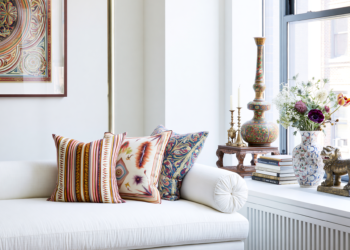
Warm Minimalism is the correction. It keeps everything minimalism got right — restraint, clarity, the refusal of clutter — and quietly discards the part that made it feel like a waiting room. The result is a style that looks just as disciplined and feels entirely different: rooms people actually want to sit in.
Most people can’t explain why one minimalist room feels sterile and another feels like the calmest place they’ve ever been. The difference isn’t taste. It’s a specific, learnable set of decisions about material, light and texture — and almost none of it involves adding more things.
The Real Difference: It Was Never About Objects
Traditional minimalism is usually defined by subtraction — fewer things, less color, emptier surfaces. That definition is incomplete, and it’s exactly the part that leads people astray. A room with nothing in it isn’t automatically calm. It can just as easily feel cold, anxious, or unfinished.
Warm Minimalism understands something traditional minimalism ignored: restraint is not the same as absence. You can keep a room extremely simple and still fill it with sensory warmth, as long as that warmth comes from how things are made, not from how many of them there are.
This is the single idea the entire style is built on. Warmth is delivered through material, light and texture. Simplicity is delivered through object count and color range. The two operate on completely different axes, which is why a room can be both at once — sparse and cozy, disciplined and inviting, quiet and alive.
Designer Tip: Next time a minimalist room feels cold to you, don’t ask what’s missing. Ask what everything in the room is made of. Cold rooms are almost always built from smooth, hard, uniform surfaces — glass, lacquer, polished concrete, chrome. That’s a material problem, not an object-count problem.
Why Traditional Minimalism Reads as Cold
Three specific choices are responsible for almost every “sterile minimalist room” people instinctively dislike, and none of them are about having too few possessions.
Uniform hard surfaces. Glass, glossy lacquer, polished stone and chrome all share one trait: they reflect light evenly and offer the eye nothing to settle on. A room built entirely from these materials has no visual texture to rest on, and the brain reads that absence as tension rather than calm.
Cool color temperature. Minimalism’s early aesthetic borrowed heavily from gallery and retail lighting — bright, even, blue-white light designed to make objects look neutral and untouched. That lighting is correct for displaying a product. It is wrong for a room people are meant to live in.
Total symmetry with no imperfection. Perfectly matched furniture, perfectly even paint, perfectly aligned everything — this reads as showroom, not home. A single handmade or irregular element breaks that uniformity just enough to signal that a person, not a catalog, put the room together.
Warm Minimalism simply reverses each of these: soft, matte, natural materials; warm, layered, low light; and at least one deliberately imperfect object per room. Nothing else about the discipline of minimalism changes.
Materials: Where the Warmth Actually Lives
If Warm Minimalism has a secret, it’s that almost all of its emotional effect comes from four or five material decisions, repeated with total consistency.
- Matte over glossy, everywhere. Matte paint, honed (not polished) stone, brushed rather than chrome metal. Gloss reflects; matte absorbs, and absorption is what reads as soft to the eye.
- Natural fiber over synthetic. Linen, wool, raw cotton and jute all have irregular, light-catching texture that synthetic blends can’t replicate, no matter how similar the color.
- Warm wood over cool wood or laminate. Oak, ash and light walnut bring visible grain and a warm undertone that laminate and painted MDF cannot fake convincingly at close range.
- Textured plaster or limewash over flat painted drywall. A wall with subtle tonal variation and physical texture catches light differently throughout the day, which flat paint never does.
- Unlacquered or aged metal over polished chrome. Brass, bronze and blackened steel develop character over time instead of staying clinically perfect.
Material Pairing: The fastest way to warm up a cold minimalist room without adding a single new object is to change three surfaces: swap a glossy coffee table for a matte stone or wood one, swap a chrome floor lamp for one in aged brass or blackened steel, and repaint one wall in a warm, textured plaster finish instead of flat white. That’s the entire transformation.
Lighting: The Difference Between Calm and Cold
No single decision affects the emotional temperature of a minimalist room more than lighting, and it is the most commonly ignored.
Color temperature must stay at or below 2700K. This is non-negotiable in Warm Minimalism. Anything cooler starts to compete with the warmth of the materials around it, no matter how carefully those materials were chosen.
Light needs to come from multiple low sources, not one central one. A single ceiling fixture lighting an entire room evenly is efficient and completely at odds with warmth. Warm Minimalism relies on pools of light — a floor lamp in one corner, a table lamp in another — that leave some areas of the room in soft shadow. Shadow is not the enemy here; even, shadowless light is.
Dimmable is not optional. The same room needs to function as a bright, clear space during the day and a soft, low space in the evening. A single fixed brightness can’t do both.
Styling Rule: If you can see the light source itself glowing brightly from across the room, it’s too bright or too exposed. The best lamps in Warm Minimalist interiors are felt as a warm pool on a surface, not seen as a bright bulb.
Texture Without Clutter: The Hardest Balance in the Style
This is where most people either succeed brilliantly or fail completely, because it requires holding two instincts at once that feel contradictory.
The instinct to add texture and the instinct to add objects are not the same instinct, but most people treat them as identical. A cushion is an object. The weave of that cushion’s fabric is texture. You can increase texture in a room without increasing its object count at all — by choosing a heavier linen weave over a smooth cotton, a hand-thrown ceramic over a machine-molded one, a nubby wool rug over a flat-woven one.
The discipline is this: when you want to add warmth, ask whether you can upgrade the texture of something already in the room before you consider adding something new. This single habit is responsible for more successful Warm Minimalist rooms than any shopping list.
Common Mistake: Interpreting “add texture” as permission to add more things — an extra throw, an extra cushion, an extra basket. Within a few additions, the room has quietly become cluttered while still using a minimalist color palette, which is the exact hybrid failure state that gives minimalism its cold, try-hard reputation in reverse: busy but joyless.
Restraint vs. Decoration: The Core Discipline
Decoration asks “what can I add to make this room feel finished?” Restraint asks “what is the fewest number of the right things this room needs?” Warm Minimalism is built entirely on the second question.
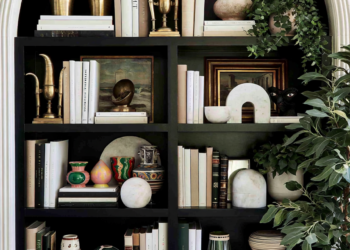
This shows up most clearly in how surfaces are treated. A decorated room fills every console, shelf and coffee table because empty surfaces feel unfinished to an untrained eye. A restrained room leaves most surfaces empty on purpose, because negative space is doing real visual work — it lets the few objects present actually be seen, rather than competing for attention with ten others.
The test that separates the two: in a decorated room, removing an object usually leaves a visible gap. In a well-executed Warm Minimalist room, removing any single object should leave the room looking exactly as intentional as before — because nothing in it was filling a gap to begin with. Everything was chosen, not placed.
Designer Tip: Before adding anything to a room, wait two weeks living with the empty surface first. Most of what feels like “missing” after two days feels unnecessary after two weeks. This single habit prevents almost all accidental over-decoration.
Color: A Narrower Palette Than People Expect
Warm Minimalism uses fewer colors than most people assume, and the discipline is in the narrowness, not the specific shades chosen.
- Base tone (majority of the room): One warm neutral — oatmeal, warm white, soft sand — used across walls, large upholstery and flooring undertones.
- Supporting tone: One natural material tone, usually wood, that repeats across at least two or three pieces so it reads as a decision rather than an accident.
- A single accent, used once: A deeper warm tone — rust, olive, walnut, aged terracotta — appearing in exactly one object. Not a family of matching accent pieces. One.
Color Formula: If you can count more than three distinct tones in a room at a glance, it isn’t Warm Minimalism yet — it’s on its way toward something busier. The narrowness of the palette is precisely what makes the texture underneath it visible; introduce a fourth color and the eye starts reading color instead of material.
Furniture and Proportion
Furniture in Warm Minimalist rooms tends to be simpler in silhouette than in Organic Modern spaces — straighter lines, fewer curves — but never harsh. Edges are softened rather than sharp, corners are gently rounded rather than knife-edged, and every piece sits low enough to keep sightlines open across the room.
Fewer, larger pieces consistently outperform more, smaller ones. A single substantial sofa reads calmer than a sofa plus two accent chairs plus a pouf, even when the total seating capacity is identical. Each additional piece of furniture is another shape for the eye to process, and Warm Minimalism keeps that number as low as the room’s actual function allows.
The Most Common Mistakes
Mistake 1: Mistaking “empty” for “warm minimalist.” An empty room is not automatically calm — it can read as unfinished or cold if the materials inside it are hard and the lighting is flat. Warmth has to be built in deliberately; it doesn’t arrive by default once clutter leaves.
Mistake 2: Using cool white lighting because the walls are already neutral. Neutral walls need warm light more, not less — they have no color of their own to soften the light’s temperature, so a cool bulb reads even starker against them than it would against a bolder wall color.
Mistake 3: Keeping the palette narrow but the materials hard. A room can be perfectly restrained in color and still feel cold if it’s built from glass, chrome and glossy lacquer. Warmth is a material property first, a color property second.
Mistake 4: Treating restraint as a budget decision rather than a design decision. Buying fewer, cheaper things is not the same as buying fewer, considered things. A room with three inexpensive but low-quality pieces usually feels emptier than one built around a single well-made anchor piece.
Mistake 5: Filling every empty surface out of habit. The instinct that a bare console or empty shelf looks “unfinished” is one of the fastest ways to slide from Warm Minimalism into ordinary over-decorated neutral rooms.
Applying It Room by Room
Living room: One substantial sofa, one lighting layer at floor height and one at table height, and no more than two additional furniture pieces. Let the plaster or paint texture on the walls carry visual interest instead of artwork density.
Bedroom: Linen bedding in a single warm tone, one ceramic or aged-metal lamp at 2700K or below, and a nightstand with nothing on it except that lamp. This is the room where restraint matters most, because it’s the room meant for rest.
Kitchen: Matte cabinetry in a warm neutral rather than gloss white, warm under-cabinet lighting instead of cool overhead strips, and open shelving used for a small number of genuinely beautiful, functional objects rather than full display.
Bathroom: Honed rather than polished stone, warm-toned wood vanity instead of white laminate, and dimmable warm lighting — one of the few rooms where people will feel the temperature difference between cold and warm minimalism most immediately.
The Definition Worth Remembering
Traditional minimalism asked: how little can this room contain? Warm Minimalism asks a better question: how much feeling can this room hold using almost nothing?
The answer was never about adding things back in. It was about noticing that warmth was never an object in the first place — it was always a property of material, light and texture, quietly available inside a still very simple room. Once you see that distinction, you can’t unsee which minimalist rooms are actually warm and which ones were only ever empty.